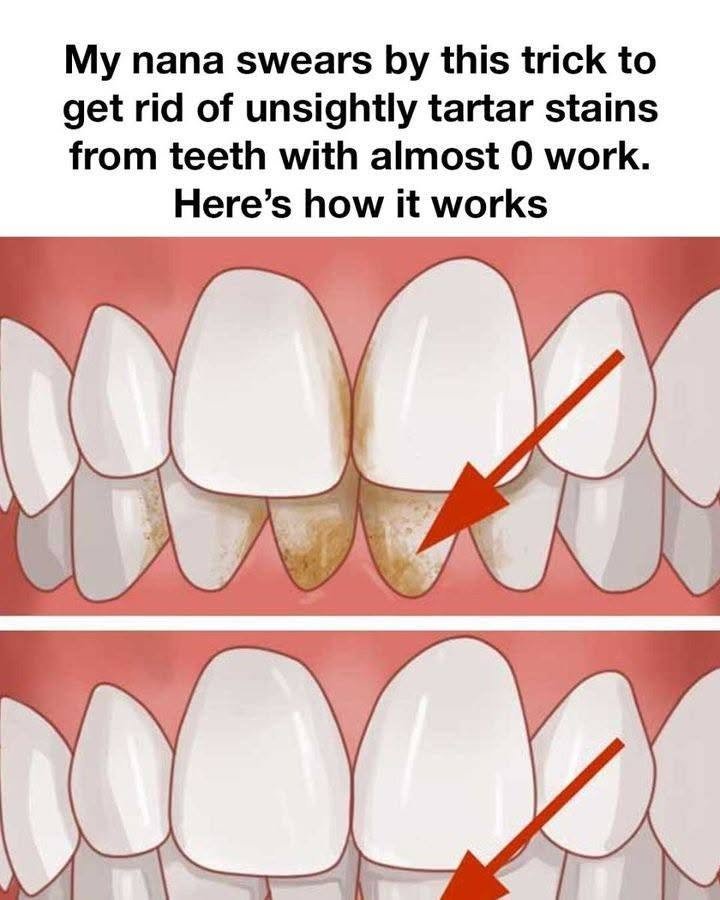
While folk remedies passed down through generations are full of charm, “zero-work” kitchen hacks for removing tartar or deep dental stains usually rely on aggressive chemical or mechanical action.
The most common version of this trick involves mixing household acids (like lemon juice or apple cider vinegar) with harsh abrasives (like baking soda) to create a bubbling paste or rinse.
Here is a look at how these tricks appear to work—and why dentists urge extreme caution:
How the “Trick” Appears to Work
-
Chemical Dissolution: The high acidity in lemon juice or vinegar helps break down surface discoloration, plaque compounds, and mineralized bonds.
-
Mechanical Scouring: When mixed with baking soda, the fizzing reaction combined with the abrasive texture physically scours away the outer layer of surface stains and film, making teeth look instantly brighter.
The Catch: Why It Damages Your Smile
While it might seem like a clever shortcut, using kitchen acids and heavy abrasives on your teeth carries a heavy hidden cost:
-
Acid Erosion Destroys Enamel: Lemon juice and vinegar are highly acidic. Exposing your teeth to concentrated acid softens the enamel (the hard, protective outer shell). If you brush or scrub while your enamel is in this weakened, softened state, you literally wear it away.
-
Enamel Never Grows Back: Unlike skin or bone, tooth enamel cannot regenerate. Once it is thinned or stripped away, it is gone for good.
-
The Irony of Yellow Teeth: Beneath white enamel lies dentin, which is naturally yellowish-brown. As acidic DIY hacks slowly wear away your white enamel, more of the yellow dentin shows through, eventually making your teeth yellower and far more prone to staining.
-
Extreme Sensitivity: Thinned enamel exposes the microscopic nerve pathways inside your teeth, leading to sharp, painful sensitivity to hot, cold, and sweet foods.
Understanding the Difference: Stains vs. Tartar
It helps to separate everyday stains from true tartar:
-
Surface Stains: Caused by coffee, tea, red wine, or tobacco. These live on the very outer layer of the tooth and can be safely managed with ADA-accepted whitening toothpastes or professional polishing.
-
Tartar (Calculus): Hardened, calcified plaque that has bonded chemically to the tooth. Because it is as hard as concrete, no amount of kitchen acid or home brushing can safely dissolve it without destroying the tooth structure underneath.
If you want a safe, zero-damage way to brighten your smile at home, stick to toothpastes bearing the American Dental Association (ADA) Seal of Acceptance, and leave the heavy lifting of tartar removal to your dental hygienist’s ultrasonic scaler!
