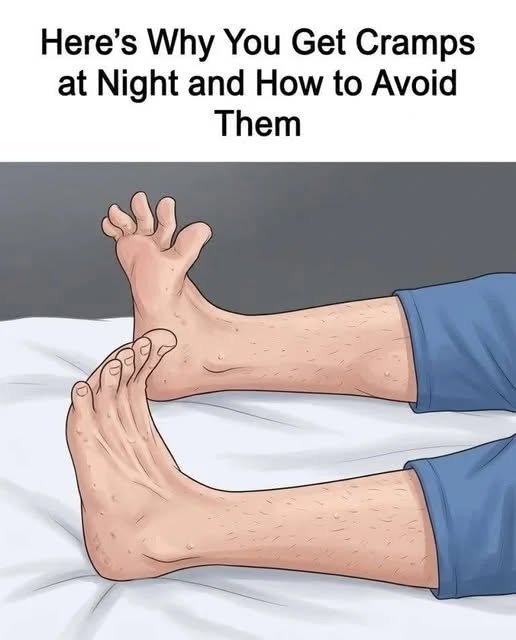
Nighttime leg cramps—those sudden, agonizing contractions that lock up your calf or foot right as you are drifting off to sleep—can instantly shatter a peaceful night.
Understanding what triggers these spasms and how to manage them naturally can help you finally get some uninterrupted rest.
7 Common Causes of Nighttime Leg Cramps
-
Muscle Fatigue and Overuse: Standing for long hours, intense workouts, or unusual physical strain can leave your leg muscles exhausted, making them prone to seizing up once you relax.
-
Dehydration: When your body lacks adequate fluids, the fluid balance surrounding your muscle cells is disrupted, causing nerves to misfire and trigger painful spasms.
-
Electrolyte Imbalances: Low levels of essential minerals—particularly magnesium, potassium, calcium, or sodium—impair how your muscles contract and relax.
-
Prolonged Sitting or Inactivity: Sitting at a desk or lying still for extended periods reduces blood circulation to your lower extremities, setting the stage for cramping.
-
Poor Circulation: Restricted blood flow in the legs deprives muscle tissue of the steady oxygen and nutrients it needs to function smoothly.
-
Certain Medications: Diuretics (water pills), statins, and certain blood pressure medications are well-documented culprits that can deplete electrolytes or alter muscle function.
-
Pregnancy: Hormonal shifts, increased body weight, and altered mineral demands frequently lead to increased leg cramps, especially during the second and third trimesters.
How to Stop and Prevent Them Naturally
-
Stretch Before Bed: Spend 5 minutes doing gentle calf and hamstring stretches before turning off the lights to lengthen the muscle fibers.
-
Prioritize Hydration and Electrolytes: Sip water steadily throughout the day. Incorporate magnesium-rich foods (like pumpkin seeds, almonds, and leafy greens) and potassium-rich foods (like bananas and avocados) into your meals.
-
Apply Heat or Ice: When a cramp strikes, massaging the area or applying a warm heating pad helps relax the seizing muscle. A cool pack can follow if there is lingering soreness.
-
Wear Supportive Footwear: Avoid unsupportive shoes or walking barefoot on hard floors for long stretches, as foot fatigue frequently radiates up into the calves.
