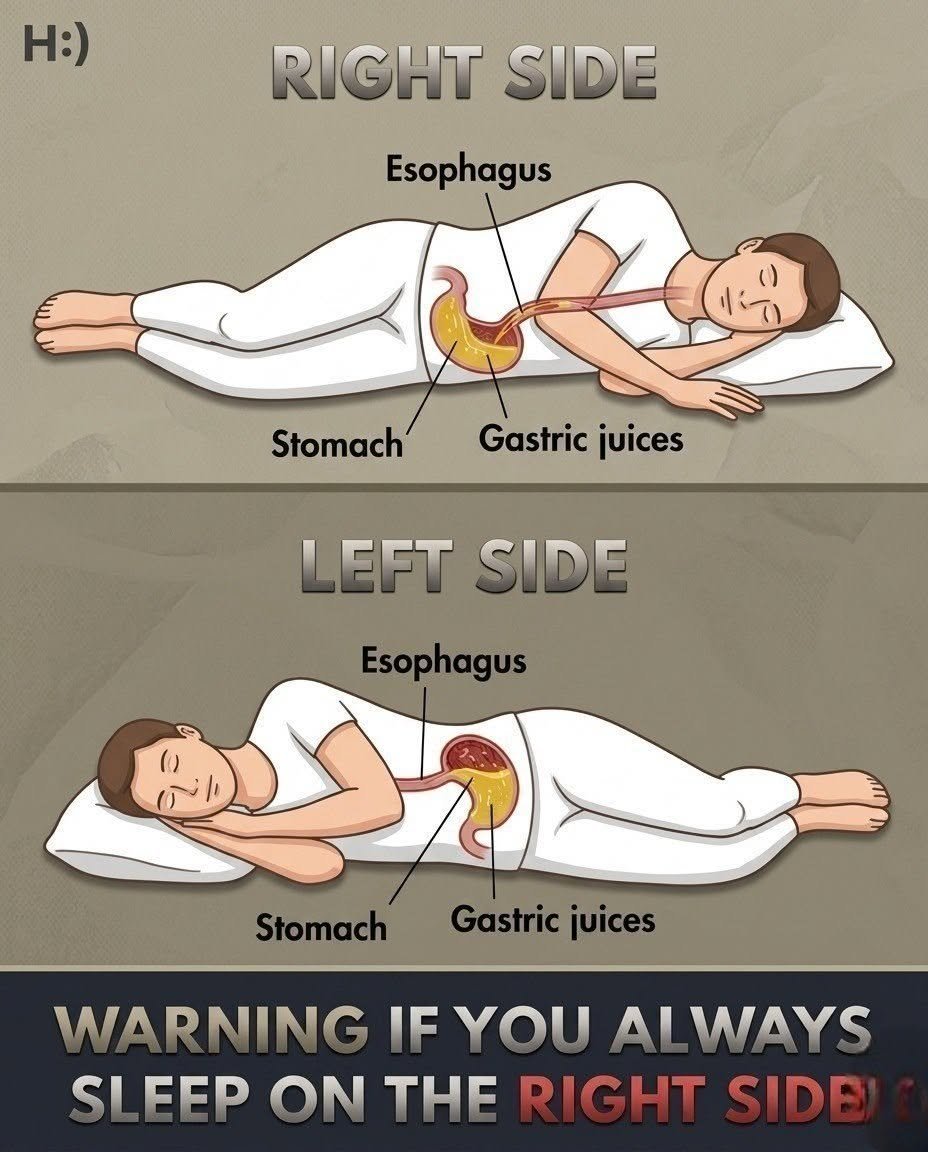
When clickbait health articles or social media videos abruptly warn that “if you always sleep on your right side, you should have…” they are usually trying to set you up for a dramatic, fear-inducing claim about your digestion, heart health, or brain function.
Let’s cut through the internet exaggeration and examine what sleep posture actually does—and doesn’t—mean for your health.
The Clinical Reality: Does Sleeping on Your Right Side Harm You?
In short: No, regularly sleeping on your right side will not cause severe medical disaster.
While wellness blogs often claim that you must sleep exclusively on your left side to aid digestion or protect your heart, the human body is remarkably adaptable. Throughout the night, most people naturally shift positions multiple times. Unless you have specific, advanced medical conditions, your preferred sleeping posture is largely a matter of comfort.
However, from an anatomical and physiological perspective, different sleep positions do have subtle, measurable effects on the body.
Right Side vs. Left Side: What Science Actually Says
-
Acid Reflux (GERD):
-
The Anatomical Reason: This is where the left-side preference has genuine scientific backing. Because of the asymmetrical shape of the stomach, your stomach sits slightly to the left and below the esophagus. When you lie on your left side, the gastric junction sits above the level of gastric acid, making it harder for acid to splash up into the esophagus. When you lie on your right side, the stomach acid can pool against the lower esophageal sphincter, potentially triggering or worsening heartburn in people prone to GERD.
-
-
Heart Function:
-
The Myth: Some viral posts claim that sleeping on your right side puts “pressure” on the heart.
-
The Reality: For healthy individuals, the heart is securely suspended in the mediastinum (the central compartment of the chest cavity) by connective tissue and protected by the ribcage. Gravity does not cause it to flop around or experience significant strain based on whether you face left or right. (However, doctors sometimes advise patients with advanced congestive heart failure to avoid sleeping flat on their backs or left sides if it causes discomfort or breathing changes).
-
-
Pregnancy:
-
The Clinical Guidance: Obstetricians universally recommend that pregnant individuals sleep on their left side (especially in the third trimester). This prevents the growing uterus from putting heavy pressure on the inferior vena cava—the large vein running along the right side of the spine that returns blood from the lower body back to the heart—thereby maintaining optimal blood flow to both the mother and the fetus.
-
What Truly Matters for Sleep Health
While sleep posture has minor impacts on specific conditions like acid reflux or pregnancy comfort, obsessing over the “perfect” side to sleep on can actually backfire by causing sleep anxiety.
Instead of worrying about whether you favor your right or left side, focus on the pillars of restorative sleep:
-
Spinal Alignment: Use a supportive mattress and a pillow that keeps your head, neck, and spine in a neutral, comfortable alignment. If you sleep on your side, placing a small pillow between your knees can take pressure off your hips and lower back.
-
Consistent Schedule: Going to bed and waking up at the same time every day supports your circadian rhythm far more than sleeping position.
-
Sleep Quality: Waking up feeling rested and refreshed is the ultimate indicator that your sleep posture is working just fine for your body.
