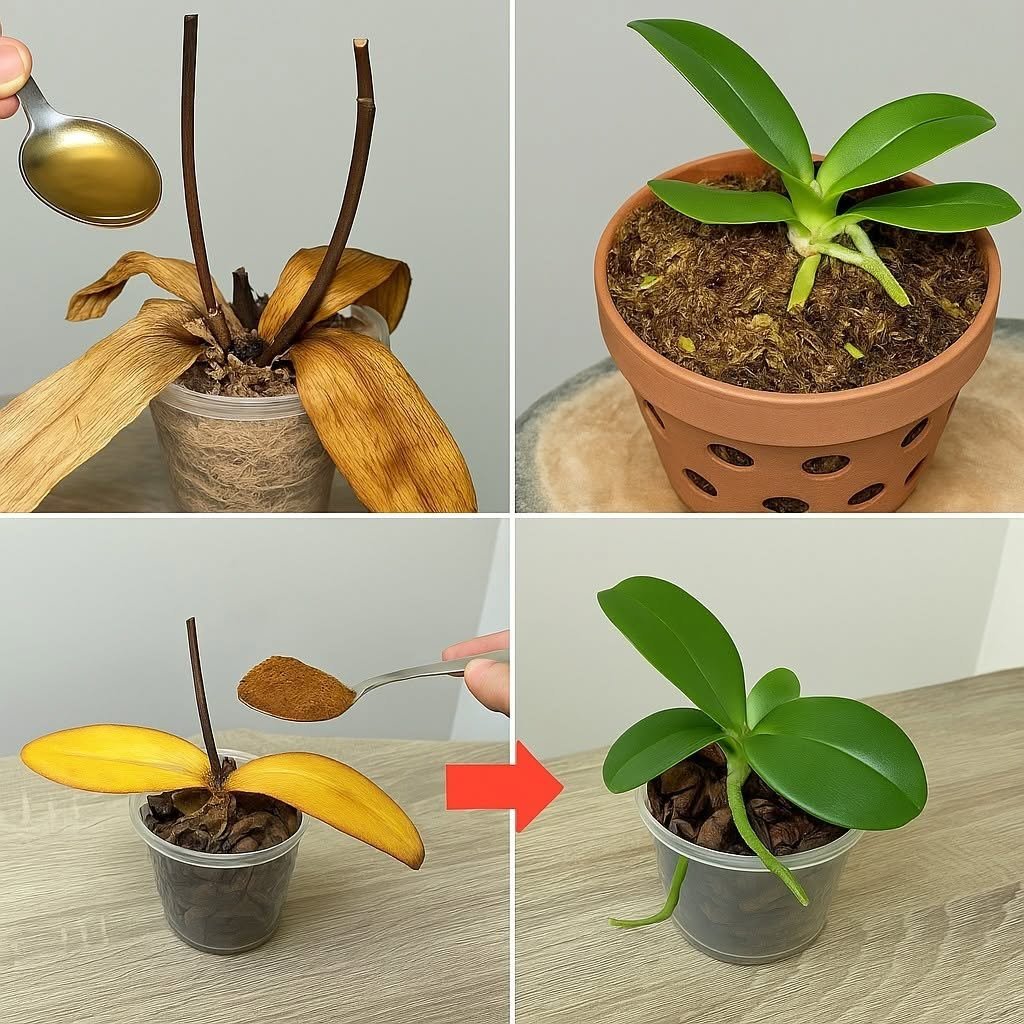
When clickbait gardening blogs and viral social media reels promise that “sprinkle 1 spoon on dead orchid roots! Suddenly revived and blooms all year round,” they are relying on sensationalized agricultural magic to exploit the frustration every plant owner feels when a delicate houseplant starts to fade.
The underlying horticultural and botanical reality is much more sobering: dead plant tissue cannot be resurrected. Once root cells have completely desiccated, rotted away, or turned brown and hollow, no household powder, secret spice, or miracle spoon-fed additive can bring them back to life. Furthermore, orchids (Phalaenopsis and other popular varieties) have distinct, cyclical blooming periods driven by temperature drops and light exposure; no legitimate plant naturally blooms 365 days a year without depleting its energy reserves.
An evidence-based look at what actually happens to orchid roots helps separate viral gardening myths from sound plant care.
1. What Orchid Roots Actually Need (And Why “Miracle Cures” Fail)
Orchids are mostly epiphytes in their natural habitats, meaning they grow clinging to the bark of trees in tropical rainforests rather than sitting in heavy soil. Their roots are uniquely adapted:
-
Velamen Layer: The spongy white or green outer layer (velamen) acts like a sponge, absorbing atmospheric moisture and nutrients. When roots are healthy and plump, they appear green (when wet) or silvery-white (when dry).
-
Root Death: When roots are overwatered, suffocated in dense potting soil, or left to dry out completely, they rot or dry up, turning mushy brown or papery yellow. Once the vascular core of a root dies, the cells are dead. You cannot reverse cellular necrosis with a spoonful of kitchen powder (whether it’s cinnamon, sugar, baking soda, or crushed fertilizer).
2. Assessing Your Orchid: Dead vs. Salvageable
Before trying to “save” an orchid, it helps to know what state the root system is actually in:
-
Healthy Roots: Firm to the touch, plump, and either silvery-green or bright green.
-
Dead/Rotted Roots: Flat, hollow, mushy, or brittle. If you pinch a dead root, the outer layer easily sloughs off, leaving behind a thin, wiry string.
-
The Plant’s Resilience: While dead roots cannot be revived, an orchid can survive and grow new roots if the crown (the central stem where leaves emerge) and at least a few viable roots remain healthy.
3. Real, Evidence-Based Steps to Revive a Struggling Orchid
If your orchid is looking stressed, forget viral kitchen hacks and focus on proper horticultural rehabilitation:
-
Unpot and Inspect: Gently remove the orchid from its pot and brush away old bark. Use sterilized shears to cleanly snip away all mushy, rotted, or completely dead papery roots. Leave any firm, viable roots intact.
-
Switch to Proper Medium: Never plant tropical orchids in standard potting soil. They require specialized coarse orchid bark or sphagnum moss that allows maximum airflow around the root system.
-
Master the Watering Technique: Stop watering on a rigid schedule. Instead, soak the bark thoroughly when the roots turn silvery-white, then let the excess water drain completely. Never let the pot sit in standing water, as soggy conditions cause root rot.
-
Provide Correct Light and Temperature: Place your orchid in bright, indirect light (such as an east- or bright-north-facing window). For Phalaenopsis orchids, a slight natural drop in nighttime temperatures during the autumn months is what naturally triggers the plant to send up a new flower spike.
The Takeaway
Ignore the viral videos promising instant botanical resurrections with a single spoonful of powder. Dead roots are gone for good, but by trimming away rot, providing chunky bark, and mastering proper watering, you can help your orchid grow a fresh, healthy root system and bloom naturally when its season comes.
