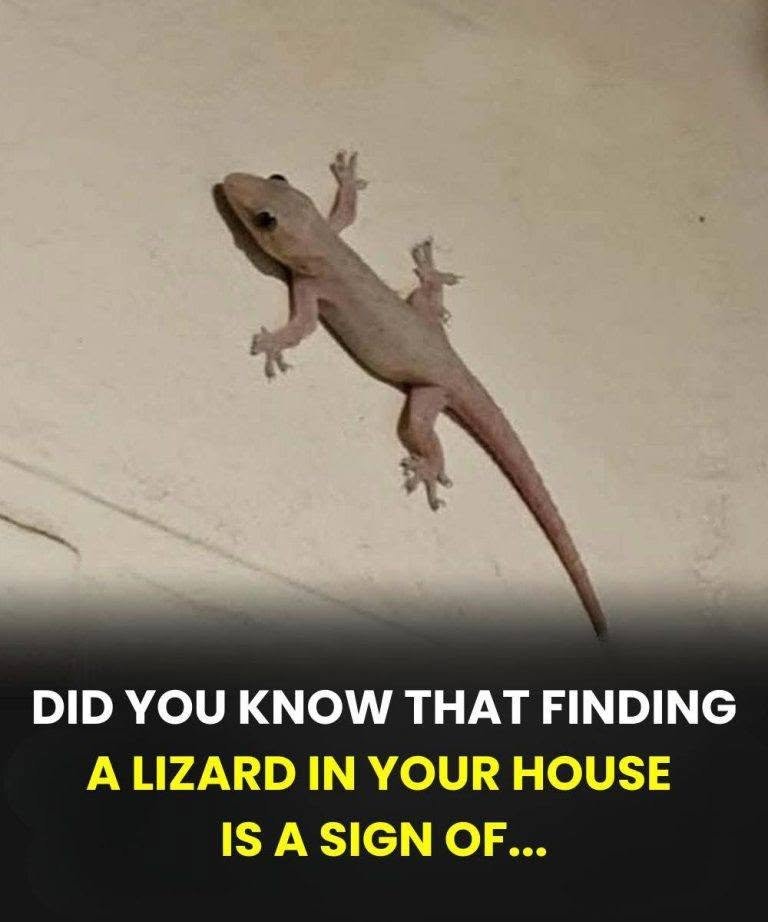
When a lizard suddenly scuttles across your living room floor or pauses on an exterior wall near your front door, it often triggers a startled reaction. Across human history, however, these encounters have rarely been viewed as mere household nuisances. Because lizards possess the unique ability to navigate tight spaces, bask motionless in the sun, and—in many species—drop and regenerate their tails, they have long captured the human imagination as powerful symbols.
Here is how different cultures around the world interpret the spiritual meaning of a lizard entering your home:
1. Hindu Tradition and Indian Folklore: Prosperity and Good Fortune
In many parts of India, particularly within traditional Hindu households, the encounter with a house gecko (chipkali) is laden with specific omens.
-
The Omens of Movement: Ancient astrological texts (such as Gowli Shastra) detail an elaborate system regarding where a lizard falls or moves on your body, or where it appears in the home. Generally, a lizard entering a home is seen as a harbinger of the goddess Lakshmi, representing wealth, fertility, and prosperity.
-
The Exception: If a lizard falls directly on a person’s head or hair, traditional beliefs sometimes interpret it as a warning of impending challenges or bad luck, requiring cleansing rituals or prayers to neutralize the sign.
2. Native American Traditions: Dreams, Regeneration, and Subconscious Wisdom
In various Indigenous cultures of North and South America, animals serve as profound spiritual teachers.
-
The Dream Realm: Because lizards are cold-blooded creatures that absorb the warmth of the sun and spend much of their time resting quietly before moving with lightning speed, they are often associated with the dream world and the subconscious mind.
-
Symbol of Adaptation: To many tribes, the lizard represents stealth, agility, and the ability to navigate unseen spiritual realms. Seeing one close to or inside a dwelling is often interpreted as a reminder to pay attention to your intuition and inner dreams.
3. Ancient Egyptian and Greek Mythology: Divine Wisdom and Renewal
In the ancient Mediterranean world, lizards held a place of honor associated with intellect and rebirth.
-
Wisdom and Good Fortune: The ancient Greeks and Egyptians associated lizards with divine wisdom, logic, and luck. In Egypt, they were sometimes carved into amulets to attract good fortune.
-
The Metaphor of Light: Because they are frequently seen basking in the sun, they symbolize the pursuit of clarity, warmth, and enlightenment—drawing energy from the environment to sustain vitality.
4. Celtic and European Folklore: Protection and Hidden Truths
In old European and Celtic superstitions, reptiles and amphibians occupied a mysterious space between the earth and the domestic sphere.
-
Guardians of the Hearth: In some rural traditions, house geckos or small lizards were welcomed because they kept insect populations in check. Spiritually, they were sometimes viewed as quiet guardians or symbols of hidden truths.
-
Shedding the Past: Because lizards regularly shed their skin, European folklore frequently viewed them as living emblems of transformation—reminding humans of the necessity of letting go of old, outgrown phases of life.
5. Chinese Feng Shui: Adaptability and Flow
In the principles of Feng Shui, wildlife entering a living space interacts with the home’s chi (energy flow).
-
Flexibility and Survival: Lizards are masters of survival, camouflage, and physical adaptation. In Feng Shui interpretation, a visiting lizard encourages flexibility, reminding inhabitants to adapt gracefully to shifting circumstances rather than resisting change.
The Practical Reality Beneath the Symbolism
While exploring the spiritual and cultural folklore of a visiting house guest can be fascinating, a physical lizard entering your home usually has a very practical explanation: weather and prey.
When outdoor temperatures become too hot, too cold, or too wet, small geckos and lizards naturally seek shelter indoors. Additionally, if your home has minor insect activity (like flies, spiders, or ants), lizards will follow the food source right inside.
The Takeaway: Whether you view a lizard’s visit as an ancient omen of prosperity, a gentle nudge to adapt to life’s changes, or simply a helpful pest-control agent wandering in from the garden, it is almost always a harmless encounter. If you prefer them outside, a gentle nudge with a cup and a piece of cardstock will safely return them to the wild.
