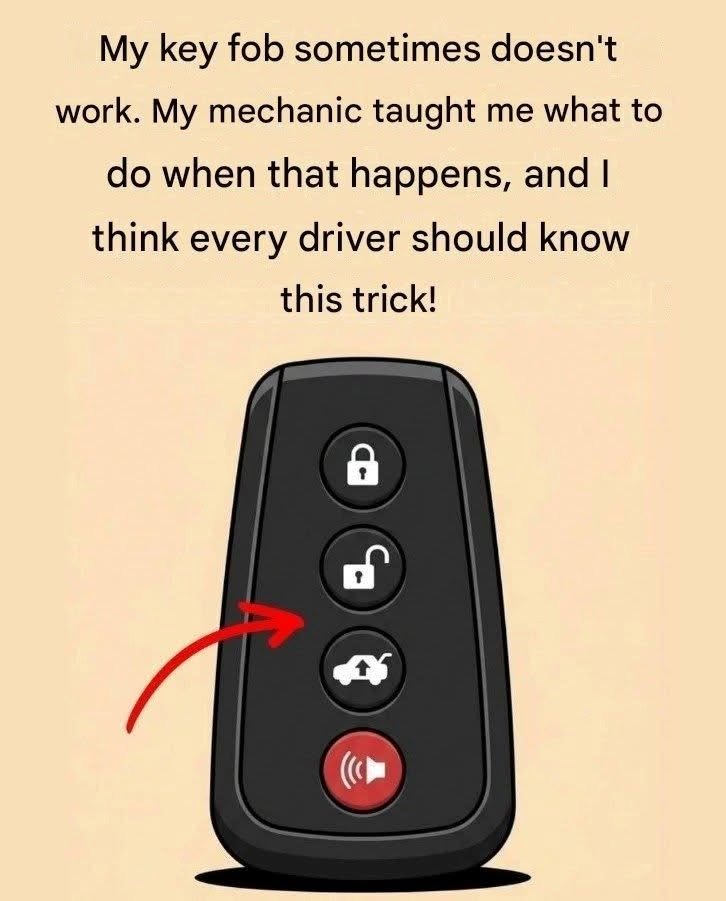
When viral tech blogs and social media shorts flash headlines like “Try these hacks when your key fob stops working,” they rely on a familiar clickbait formula: packaging standard automotive troubleshooting or quirky urban legends (like pressing the fob against your chin to “boost the signal”) as secret life hacks that car manufacturers don’t want you to know.
What Clickbait “Key Fob Hacks” Get Wrong
-
The “Secret Urban Legend” Fallacy: Content pieces often push gimmicky rituals or unverified button sequences, ignoring the straightforward electrical and mechanical realities of modern vehicle access systems.
-
Treating Total Battery Failure Like a Signal Glitch: Sensationalized guides frequently imply that waving a fob around or holding it at a specific angle will revive a completely dead lithium coin cell battery, rather than addressing the actual hardware issue.
The Technical Reality: How Key Fobs Actually Communicate
Automotive engineers design key fobs to operate using two distinct systems: active radio frequency (RF) transmission and passive near-field communication (RFID):
-
Radio Frequency (RF) Transmitters and Rolling Codes: When you press a button on your fob to lock or unlock the doors from a distance, the device broadcasts a short-range radio wave (typically around 315 MHz or 433 MHz) carrying a secure, encrypted “rolling code” recognized by your car’s receiver. If the battery is weak or local radio interference (from high-voltage power lines or nearby electronic devices) blocks the signal, the car won’t respond.
-
Passive RFID Transponders (Emergency Start): Many drivers panic when their key fob “dies” completely inside the car, leaving them unable to push-button start the engine. However, most modern push-to-start fobs contain a passive RFID chip that requires zero battery power. By holding the fob directly against the vehicle’s start button or designated steering column sensor, an inductive coil in the car powers the chip via electromagnetic fields, allowing the car to verify the key and start the engine.
-
The Mechanical Backup Key: Almost every electronic key fob houses a physical metal key blade tucked away inside a release latch, designed precisely for mechanical door entry when the electrical system fails entirely.
Practical, Engineering-Backed Troubleshooting Steps
Instead of relying on unverified internet tricks when your key fob fails, automotive professionals recommend systematic troubleshooting:
-
Check for Local RF Interference: If your fob fails in a specific parking lot or near a commercial building, heavy radio interference may be blocking the signal. Move closer to the vehicle or try unlocking the door manually with the physical key blade.
-
Inspect and Replace the Battery: Most fobs run on a standard lithium coin cell battery (such as a CR2032). If your car displays a “Key Battery Low” warning or the LED light on the fob fails to flash when pressed, replacing the battery is a quick, inexpensive fix.
-
Locate the Emergency Start Zone: Consult your vehicle owner’s manual to find where your specific model’s backup transponder receiver is located (often right behind the push-to-start button or inside the center console cup holder) so you can start the car even with a completely dead fob battery.
