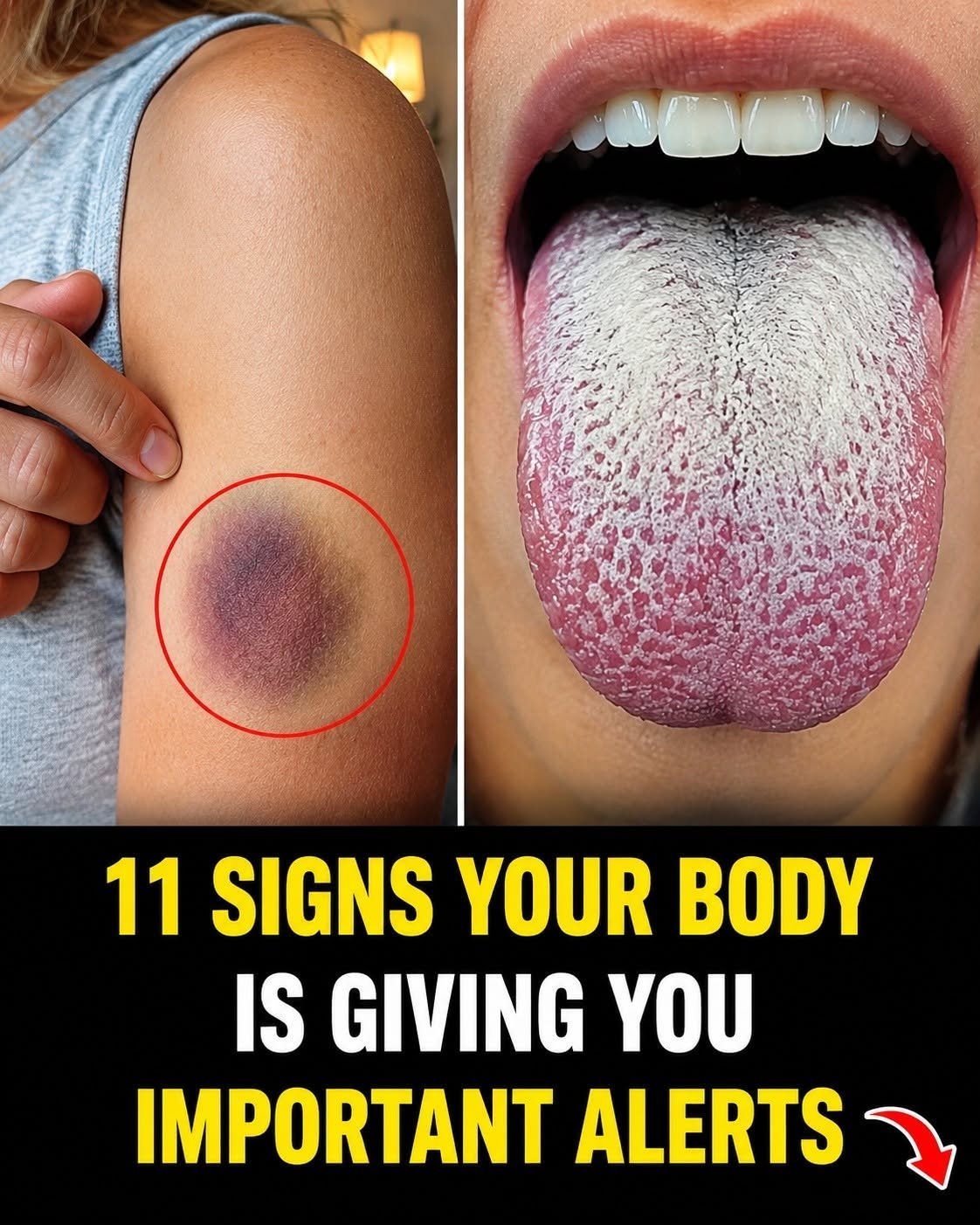
Your body has an intricate and continuous communication system. Long before a mild imbalance turns into a serious health issue, it often sends subtle physical warnings or subtle shifts that signal something needs attention.
Here are 11 common signs your body is using to give you important alerts:
1. Persistent Fatigue Despite Adequate Sleep
-
The Alert: Waking up exhausted even after 7 to 8 hours of quality rest.
-
What It Could Mean: Chronic fatigue can be a sign of iron deficiency (anemia), an underactive thyroid (hypothyroidism), Vitamin D deficiency, chronic low-grade inflammation, or sleep apnea.
2. Sudden, Unexplained Bruising
-
The Alert: Finding bruises on your legs or arms without remembering bumping into anything.
-
What It Could Mean: While easy bruising can be normal with age or thin skin, frequent or unprovoked bruising can signal a platelet disorder, a clotting factor deficiency, or low vitamin levels (such as Vitamin C or K).
3. Chronic Muscle Cramps (Especially at Night)
-
The Alert: Sudden, painful spasms in your calves or feet that wake you from sleep.
-
What It Could Mean: Frequent nocturnal cramps often point to electrolyte imbalances—specifically low magnesium, potassium, or calcium—as well as dehydration or poor circulation.
4. Changes in Hair Texture or Excessive Shedding
-
The Alert: Finding more hair in your hairbrush than usual, or noticing your hair has become brittle, dry, or thinning.
-
What It Could Mean: Hair follicles are sensitive to internal changes. Sudden shedding can indicate a drop in iron storage (ferritin), thyroid hormone imbalances, severe protein restriction, or high physiological stress (telogen effluvium).
5. Persistent Brain Fog and Memory Lapses
-
The Alert: Struggling to find words, forgetting why you walked into a room, or feeling mentally sluggish throughout the day.
-
What It Could Mean: Mental cloudiness can stem from chronic sleep deprivation, B-vitamin deficiencies (particularly B12), blood sugar instability, or chronic high cortisol (stress hormone) levels.
6. Brittle, Ridged, or Spoon-Shaped Fingernails
-
The Alert: Nails that crack easily, peel in layers, or develop vertical ridges and upward-curving edges.
-
What It Could Mean: Nail growth reflects systemic nutritional status. Brittle nails are frequently linked to iron deficiency anemia, zinc deficiency, or chronic dehydration.
7. Unexplained Changes in Bowel Habits
-
The Alert: Sudden, persistent shifts between constipation and diarrhea that don’t align with a recent dietary change.
-
What It Could Mean: Your gut is deeply connected to your immune and nervous systems. Chronic changes can signal food sensitivities, gut microbiome imbalances, inflammation, or stress impacting the gut-brain axis.
8. Frequent Tingling or Numbness in the Extremities
-
The Alert: A “pins and needles” sensation in your hands or feet that happens frequently and isn’t just from sitting in an awkward position.
-
What It Could Mean: Peripheral nerve irritation can be caused by vitamin B12 deficiency, poor circulation, compressed nerves (like carpal tunnel syndrome), or early-stage blood sugar regulation issues.
9. Chronic, Unexplained Headaches
-
The Alert: Regular tension headaches or migraines that appear without an obvious trigger.
-
What It Could Mean: Frequent headaches can be your body’s way of signaling dehydration, eye strain, magnesium deficiency, fluctuating blood pressure, or a lack of consistent sleep routines.
10. Persistent Skin Dryness or Slow-Healing Blemishes
-
The Alert: Skin that remains excessively dry, flaky, or slow to heal from minor cuts, scrapes, or breakouts.
-
What It Could Mean: Poor skin repair can indicate essential fatty acid deficiencies, low hydration, or compromised circulation and immune function.
11. Unintended Weight Fluctuations
-
The Alert: Gaining or losing weight rapidly without any intentional changes to your diet or exercise routine.
-
What It Could Mean: Unexplained weight shifts are one of the most common red flags for metabolic or hormonal disruptions, including thyroid disorders, insulin resistance, or cortisol imbalances.
