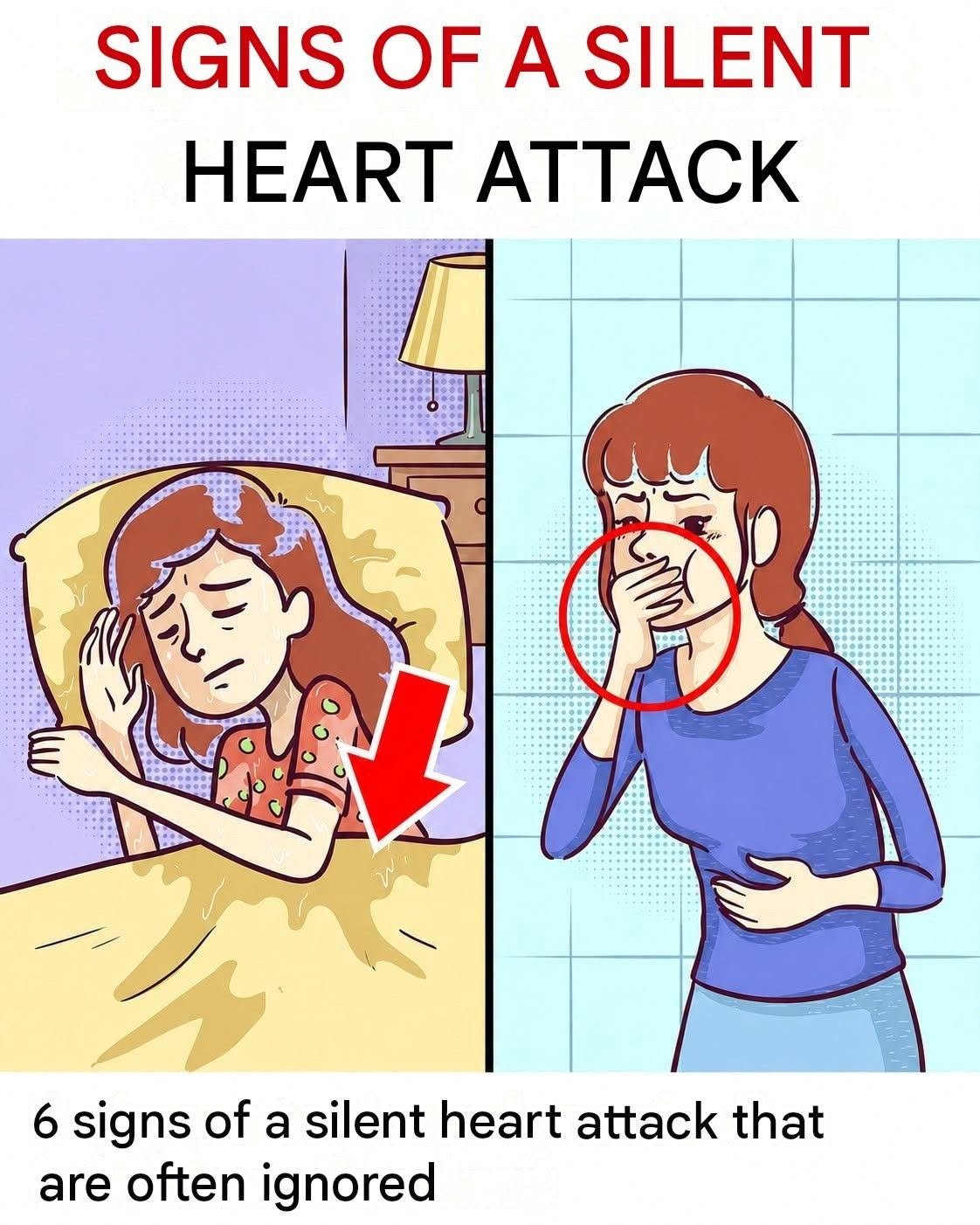
When clickbait articles tease “6 still overlooked signs of a silent heart attack,” they are cashing in on one of the most anxiety-inducing tropes in health journalism. They take ordinary bodily aches—like a mild muscle strain, a brief spell of fatigue, or minor indigestion—and frame them as a ticking time bomb hiding in your chest.
While silent myocardial infarctions (heart attacks that occur without the classic, dramatic crushing chest pain) are a real clinical phenomenon, they do not whisper their presence through vague, everyday quirks. Understanding the physiological reality behind silent heart attacks helps separate actual medical events from clickbait terror.
What is a “Silent” Heart Attack?
A silent heart attack (medically known as an unrecognized myocardial infarction) accounts for a significant percentage of all heart attacks. It occurs when blood flow to a section of the heart muscle is blocked long enough to cause tissue damage (necrosis), but the symptoms are so atypical, mild, or transient that the person doesn’t realize they are having a cardiac event.
This often happens in individuals with diabetes (where chronic nerve damage can dull pain perception), older adults, or women, whose presentation of cardiac distress can sometimes diverge from the classic textbook mold.
The Actual Subtle Signs of a Silent Heart Attack
When clinicians uncover an old silent heart attack later (often accidentally spotted on an electrocardiogram or echocardiogram), patients in retrospect describe experiencing non-traditional symptoms that felt unusual compared to their baseline:
-
Unexplained, Overwhelming Fatigue: Not just standard end-of-day tiredness, but a sudden, profound exhaustion where even minor physical tasks feel like moving through wet cement. This happens because a struggling heart pumps less efficiently, starving the body’s tissues of oxygen.
-
Vague Upper Body Discomfort: Instead of central chest pressure, the sensation might manifest as a dull ache, tightness, or a strange feeling of pressure in the jaw, neck, upper back, or one shoulder.
-
Mild Shortness of Breath: Feeling winded doing everyday activities—such as walking up a single flight of stairs or carrying groceries—that normally wouldn’t phase you, driven by temporary fluid backup in the lungs.
-
Sudden Indigestion or Epigastric Pain: Because the inferior wall of the heart sits in close anatomical proximity to the stomach, oxygen deprivation in that region can mimic upper abdominal fullness, heartburn, or nausea.
What Clickbait Gets Wrong
Sensationalized lists love to treat every random pinch, twitch, or burp as a silent heart attack in progress.
-
A Fleeting, Sharp Stabbing Pain: A lightning-fast poke or a pain that gets worse when you press on your ribs or twist your torso is musculoskeletal, not cardiac.
-
Everyday Stress Fatigue: Feeling drained after a brutal 10-hour workday or a sleepless night is normal human physiology, not silent cardiac damage.
The Bottom Line
Real cardiac events involve a distinct, uncharacteristic shift in how your body handles physical exertion or sudden systemic comfort. If you ever experience a strange cluster of unusual fatigue, breathlessness, or upper body ache that feels completely out of the ordinary—and refuses to go away with rest—don’t guess based on an internet list. Get a medical evaluation.
