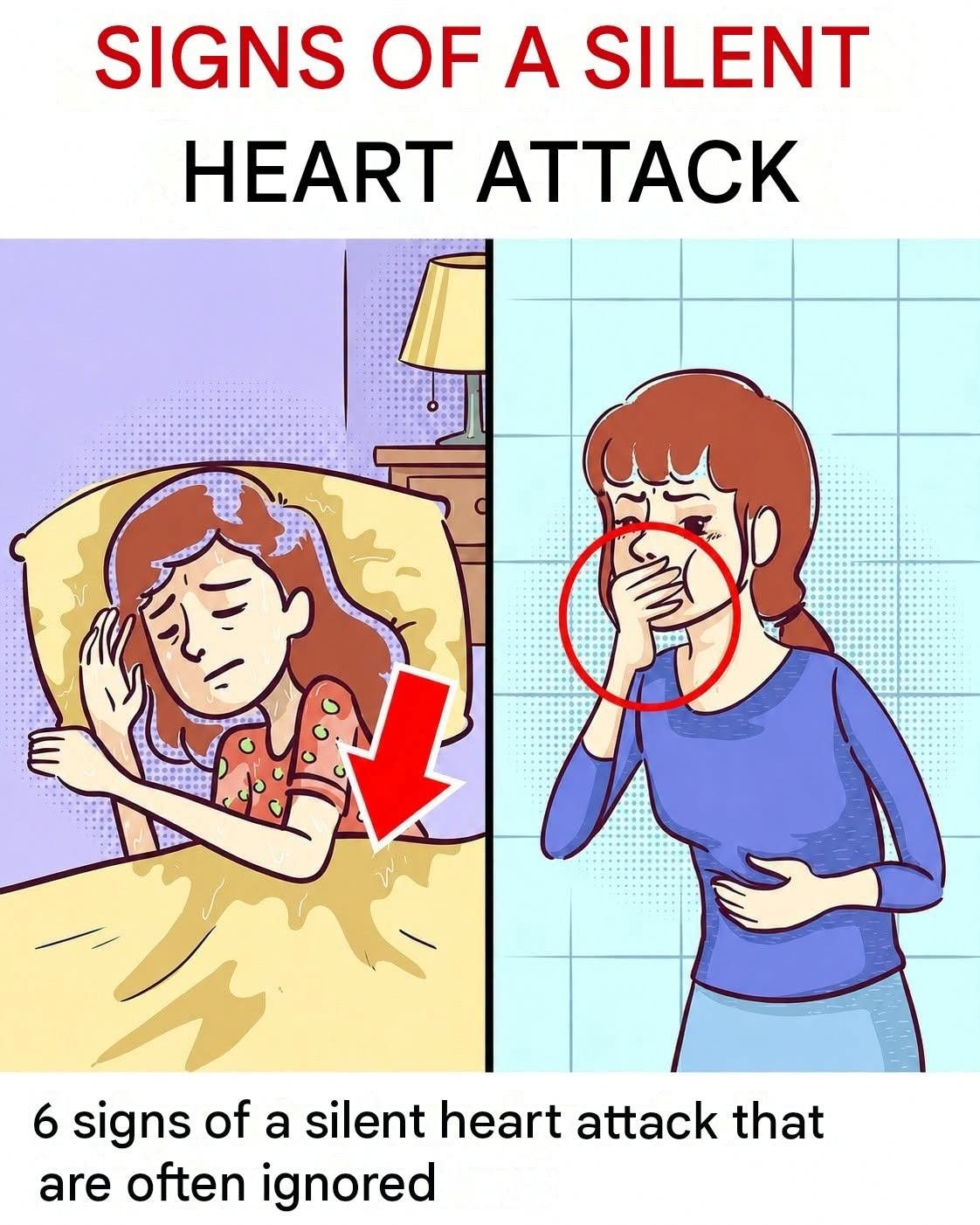
When health blogs and clickbait wellness sites publish sensationalized lists with headlines like “6 Still Overlooked Signs of a Silent Heart Attack,” they rely on a powerful emotional trigger: the fear that your body might betray you without your knowledge.
While the concept of a “silent” heart attack (medically known as a silent myocardial infarction) is real, the way the internet frames it often breeds unnecessary panic rather than useful clinical awareness.
The Reality of a “Silent” Heart Attack
A silent heart attack is a myocardial infarction that lacks the classic, dramatic Hollywood symptoms—such as crushing, left-sided chest pain radiating down the arm.
-
Why It Happens: The heart muscle is damaged because a coronary artery becomes blocked, cutting off oxygen. However, if the blockage is smaller or if the patient has altered pain perception (very common in individuals with diabetes, neuropathy, or advanced age), the classic acute pain signals may be muted or absent.
-
How It’s Discovered: Often, patients have no idea a cardiac event occurred until weeks, months, or years later when an electrocardiogram (ECG) or an echocardiogram performed for an unrelated reason reveals scar tissue on the heart muscle.
What Clickbait “Warning Signs” Exaggerate
Viral articles love to take common, everyday physical sensations and frame them as terrifying cardiac red flags:
-
The “Everything is a Heart Attack” Fallacy: Clickbait lists routinely label mild fatigue after a long workday, a muscle twitch in the chest wall, general shoulder stiffness, or standard indigestion as a “hidden heart attack.” In reality, these symptoms have dozens of common, benign causes (like musculoskeletal strain, acid reflux, or lack of sleep).
-
Creating Constant Health Anxiety: By convincing readers that an ordinary sigh or brief bout of tiredness is a silent emergency, these articles drive clicks through fear rather than educating people on genuine cardiac risk factors.
What Clinically Matters: True Subtle Signs
While you shouldn’t panic over normal fatigue, doctors recognize that a silent or atypical heart attack can present with subtle, persistent changes—particularly when multiple symptoms cluster together or occur during physical exertion:
-
Unexplained, Disproportionate Fatigue: Feeling utterly exhausted from routine daily activities (like climbing a flight of stairs you usually manage easily) that persists over days.
-
Atypical Discomfort: Instead of sharp chest pain, patients might describe a vague pressure, tightness, squeezing, or a dull ache in the center of the chest, upper back, neck, jaw, or one or both arms.
-
Unexplained Shortness of Breath: Struggling to catch your breath during mild exertion or while resting, without an obvious respiratory cause like asthma or a cold.
-
Sudden Nausea, Indigestion, or Cold Sweats: Feeling abruptly clammy, dizzy, or nauseated for no apparent reason, resembling sudden flu-like symptoms or severe acid reflux.
The Bottom Line
Silent heart attacks do occur, but they are diagnosed by looking at overall cardiovascular risk profiles (such as blood pressure, cholesterol, diabetes, and family history) and objective medical testing—not by panicking over every mild muscle ache or afternoon yawn. If you experience persistent, unusual chest pressure combined with shortness of breath or fatigue, always seek professional medical evaluation rather than guessing based on internet lists.
