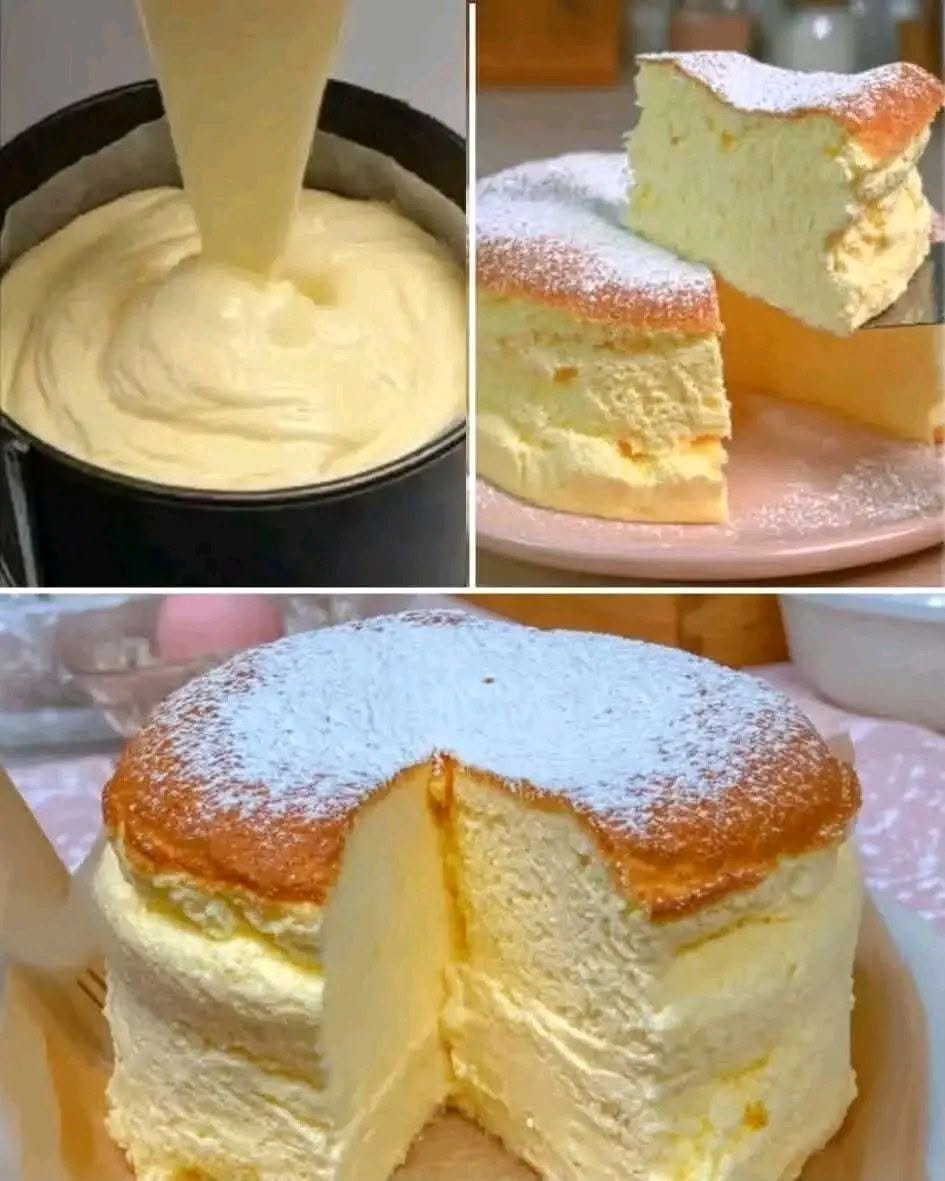
A cloud cake (often synonymous with a Japanese cotton sponge cake, soufflé cake, or light chiffon cake) lives up to its name by offering an exceptionally airy, jiggly, and delicate texture that literally melts in your mouth. Unlike heavy butter cakes, its structure relies almost entirely on physical chemistry rather than chemical leaveners.
The Secret to the “Cloud” Texture
The ethereal lightness of a true cloud cake comes down to a few specific baking techniques:
-
The Meringue Base: Egg whites are whipped separately with a touch of acid (like cream of tartar or lemon juice) and sugar until stiff, glossy peaks form. This creates a stable foam packed with microscopic air pockets.
-
Gentle Folding: The whipped whites are folded incrementally into a light batter (often containing egg yolks, milk, a touch of oil, and a minimal amount of cake flour) using wide, sweeping motions to avoid deflating the trapped air.
-
Water Bath Baking (Bain-Marie): Cloud cakes are typically baked at a lower temperature inside a pan surrounded by hot water. This gentle, moist heat allows the cake to rise evenly without forming a hard, dry crust or cracking on top.
Basic Components of a Classic Vanilla Cloud Cake
-
Eggs (Separated): The absolute star of the show—yolks provide richness and structure, while whites provide the lift.
-
Cake Flour: Finely milled flour with a lower protein content, ensuring the crumb stays tender rather than chewy.
-
Liquid & Fat: Milk (or yogurt) and a neutral oil keep the crumb moist without weighing down the delicate foam.
-
Sugar: Sweetens the cake and acts as a vital stabilizer for the whipped egg whites.
If you want to bake one at home, you can watch this Cloud Cake Recipe Guide.
This video walks through the step-by-step process of mixing the batter, whipping the meringue, and using a water bath to achieve that signature melt-in-your-mouth texture.
