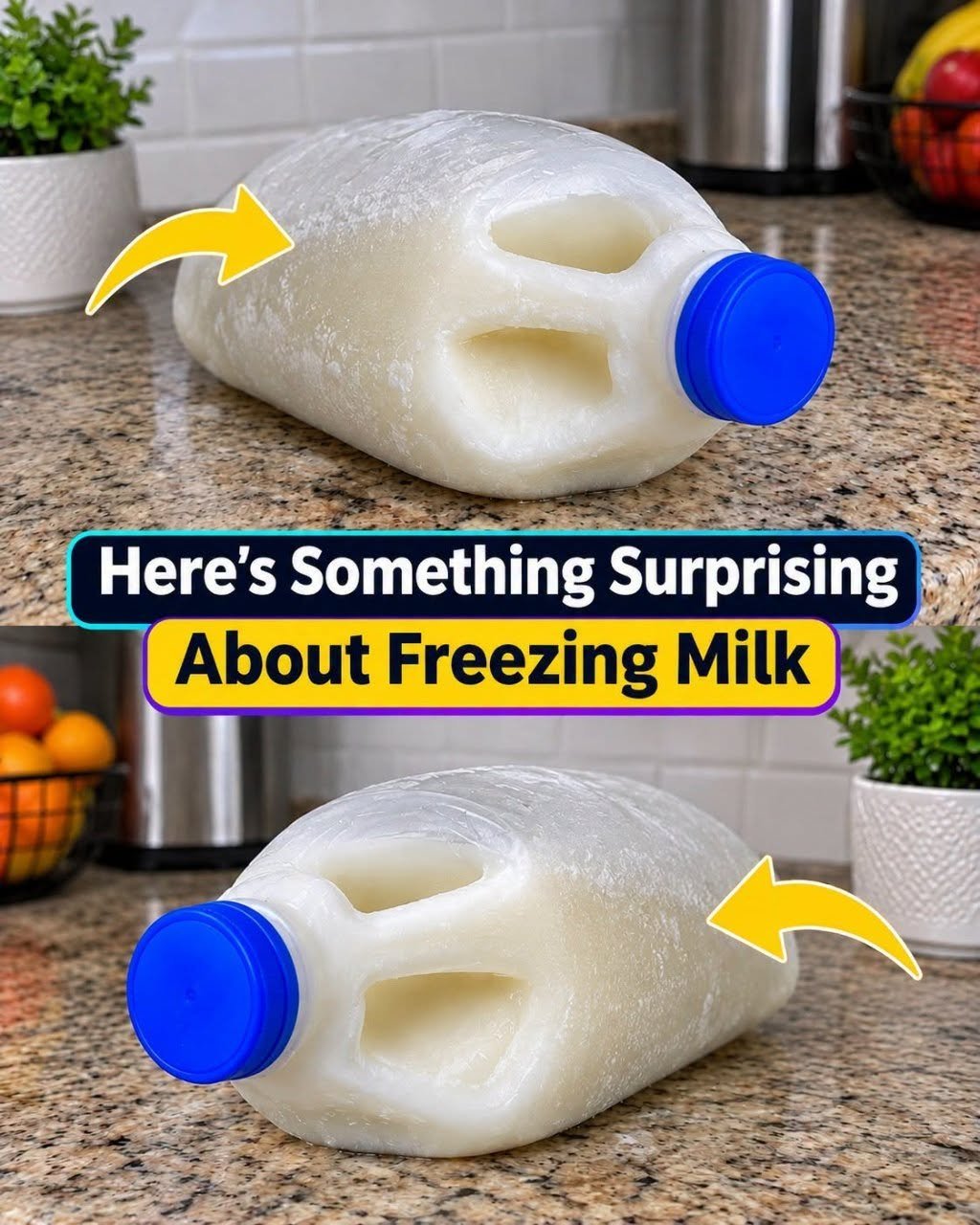
When clickbait food and kitchen articles use the breathless headline, “I Never Knew Freezing Milk Could…”, they are setting you up for either an exaggerated disaster story or an overly dramatic “life hack.”
The reality of freezing milk is much more mundane: yes, you can freeze milk, but its texture and composition change when it thaws. It isn’t a kitchen catastrophe, nor is it a magical secret—it’s just basic dairy science.
What Actually Happens When You Freeze Milk
-
Separation and Graininess: Milk is an emulsion of water, fats, proteins, and sugars. When milk freezes, the water expands into ice crystals and the fat and protein emulsions separate. When you thaw it, the milk often looks watery, slightly separated, or grainy.
-
Nutritional Integrity Stays Intact: While the texture can look unappealing for pouring over cereal or drinking by the glass, the nutritional value (protein, calcium, vitamins) remains completely unchanged.
-
Fat Content Matters: Skim and low-fat milks freeze and thaw with less texture disruption because they have less fat to separate. Whole milk separates much more noticeably.
How to Freeze and Thaw Milk Successfully
If you have extra milk and want to prevent waste, freezing is a great option—you just have to use the right approach:
-
Leave Headroom: Liquid expands as it freezes. If you freeze milk in a glass container or fill a plastic jug to the very brim, it can crack or burst. Always pour a little bit out to leave expansion space.
-
Thaw Slowly in the Refrigerator: Move the frozen jug to the fridge a day or two before you need it. Slow thawing helps the emulsions reabsorb better than rapid thawing in the microwave.
-
Give It a Vigorous Shake: Once fully thawed, shake the container hard to help blend the separated fats and proteins back together.
-
Use It for Cooking: Because of the slight textural change, thawed milk is best reserved for baking, cooking, making pancakes, or blending into smoothies rather than pouring straight into a cup of tea or cereal.
