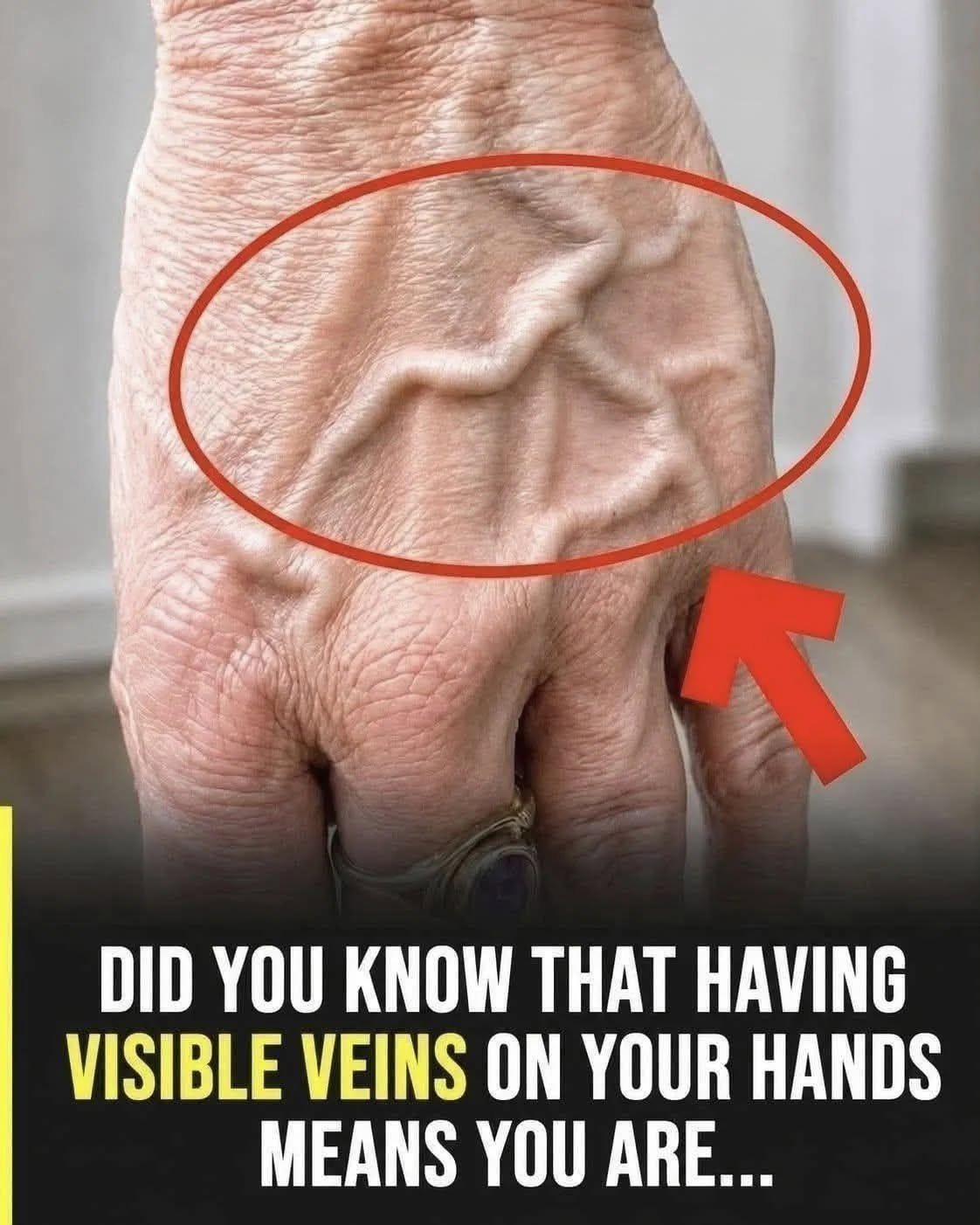
When wellness articles or social media posts use a breathless cliffhanger like “Did you know that having visible veins means you are…” they are setting up a classic clickbait hook. They want to make you panic—implying that a prominent vein in your hand, arm, or leg is a hidden warning sign of a catastrophic health failure.
In clinical reality, having visible veins is rarely a mysterious omen. Most of the time, it is simply a reflection of normal human anatomy, genetics, and everyday physiology.
The Real Reasons Veins Become Visible
Your veins are part of a massive vascular highway system returning blood to your heart. Whether they show prominently through the skin depends on a variety of completely normal physical factors:
-
Low Body Fat and Skin Thickness: Veins sit right beneath the skin. If you have a naturally lean physique or a lower body fat percentage, there is simply less subcutaneous fat padding cushioning the skin, making superficial veins easier to see. Similarly, as skin naturally thins with age, veins naturally become more apparent.
-
Exercise and Muscle Pump: When you exercise, your blood flow increases and your muscles contract, pushing blood through your vessels and causing them to dilate temporarily. If you build muscle mass through weight training, your muscles push superficial veins closer to the surface.
-
Genetics and Complexion: Fair-skinned individuals naturally show blue or green-tinted surface veins more clearly than those with darker skin tones. Genetics also dictate how close your superficial vein network sits to the surface of your skin.
-
Environment and Heat: In warm weather, your body dilates blood vessels near the skin’s surface to help release heat and cool you down, making veins temporarily more prominent.
When Visible Veins Actually Warrant Attention
While everyday visible veins are normal, certain changes in your veins do deserve clinical evaluation:
-
Varicose Veins: If the tiny one-way valves inside your leg veins weaken over time, blood can pool, causing veins to become twisted, enlarged, and bulging (known as varicose veins). This can lead to aching, heaviness, or swelling in the legs.
-
Sudden Pain or Swelling: If a prominent vein becomes hard, red, painful, or warm to the touch, or if you experience sudden swelling in one leg, it requires a medical check to rule out issues like superficial phlebitis or a blood clot.
The Bottom Line
Having visible veins doesn’t mean you are facing a secret health crisis—usually, it just means you have lower body fat, have been hitting the gym, or have normal, fair skin. Unless your veins are accompanied by persistent pain, swelling, or severe twisting (varicosities), you can safely ignore the internet cliffhangers.
