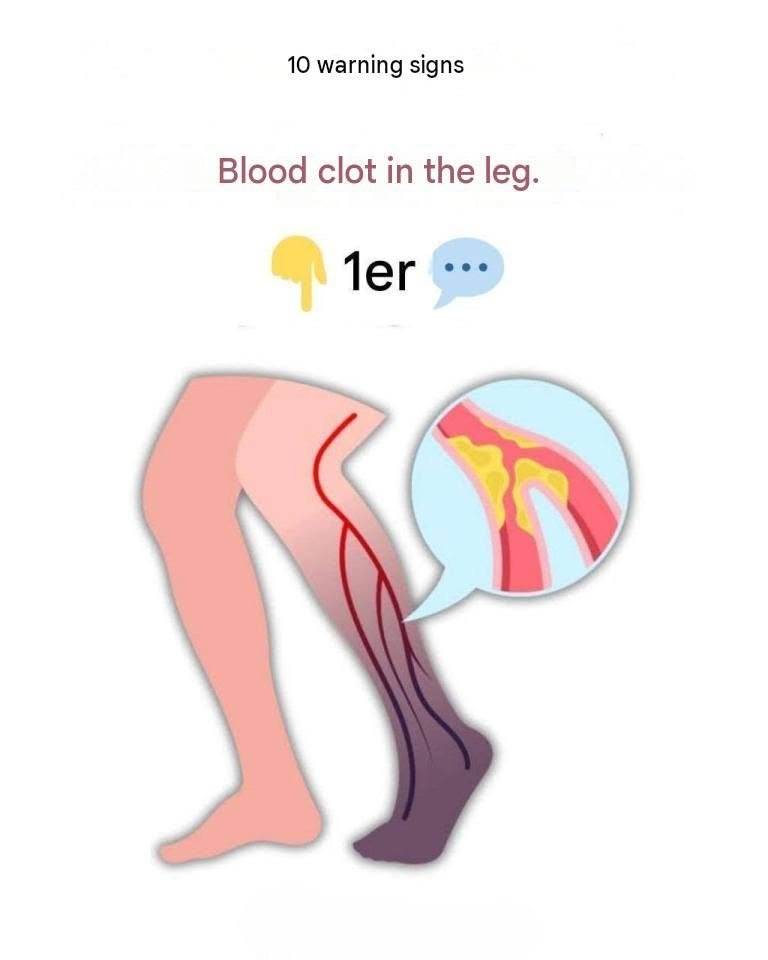
When health blogs and sensationalized news feeds publish alarming titles like “10 Warning Signs of a Blood Clot in the Leg,” they often mix up genuine vascular emergencies with everyday muscle cramps, minor sprains, or normal swelling.
While a blood clot in the deep venous system—known as Deep Vein Thrombosis (DVT)—is a serious medical condition requiring prompt evaluation, understanding the actual clinical presentation helps separate internet panic from vital medical awareness.
What a Blood Clot (DVT) Actually Is
A DVT occurs when a thrombus (blood clot) forms in one of the deep veins, most commonly in the lower leg or thigh.
-
The Core Mechanism: When blood flow slows down or becomes obstructed (due to prolonged immobility, surgery, trauma, or underlying clotting predispositions), blood cells can clump together.
-
Why It Is Dangerous: The primary risk of an untreated DVT is that a piece of the clot can break loose, travel through the bloodstream, and lodge in the lungs—a life-threatening emergency called a pulmonary embolism (PE).
What Clickbait “Clot Lists” Get Wrong
Sensationalized articles often manufacture unnecessary fear:
-
The “Every Cramp is a Clot” Myth: Clickbait lists frequently point to fleeting nighttime leg cramps, general muscle soreness after a workout, or mild spider veins as signs of a dangerous clot. Ordinary muscle cramps affect both legs and resolve quickly with stretching; a DVT typically presents with localized, persistent symptoms in one limb.
-
Vague Generalizations: They lump together unrelated vascular phenomena to maximize click-through anxiety.
Key Clinical Signs of a Deep Vein Thrombosis (DVT)
Clinicians look for specific, localized physical indicators when evaluating a patient for a potential blood clot in the leg. While articles often pad lists to reach arbitrary numbers, the primary clinical warning signs include:
-
Unilateral Swelling: Swelling that develops in one leg or ankle (not both). If your entire leg swells rapidly, it is a significant clinical flag.
-
Localized Pain or Tenderness: A persistent ache, cramping, or tenderness in the calf or thigh—often feeling like a severe pulled muscle that does not improve with rest.
-
Skin Discoloration: The skin around the affected area may appear reddish, bluish, or pale compared to the healthy leg.
-
Increased Skin Temperature: The skin over the painful or swollen area often feels noticeably warmer to the touch than the surrounding tissue.
-
Visible Superficial Veins: If deep veins are blocked, superficial veins near the skin’s surface may become more prominent or engorged as they take on extra blood flow.
-
Pain When Flexing the Foot: Discomfort or sharp pulling in the calf when bending the foot upward (historically evaluated as Homan’s sign, though doctors rely on ultrasound imaging for formal diagnosis).
-
Pitting Edema: Pressing a thumb into the swollen shin or calf leaves an indentation that takes a few moments to bounce back.
-
Heavy or Full Sensation: A distinct feeling of heaviness or tightness in the affected limb, making movement feel restricted.
-
Progressive Worsening: Unlike a temporary muscle strain that heals over days, DVT symptoms typically worsen steadily over hours or days.
-
Asymmetry: The most crucial rule of thumb is asymmetry—when one leg looks and feels markedly different from the other.
The Bottom Line
Don’t panic over routine muscle stiffness or everyday cramps. However, if you notice sudden, unilateral swelling, persistent calf pain, and warmth in one leg, do not ignore it—seek medical evaluation immediately. Furthermore, if leg symptoms are accompanied by sudden shortness of breath, rapid heart rate, or unexplained chest pain, call emergency services right away, as these signal a potential pulmonary embolism.
