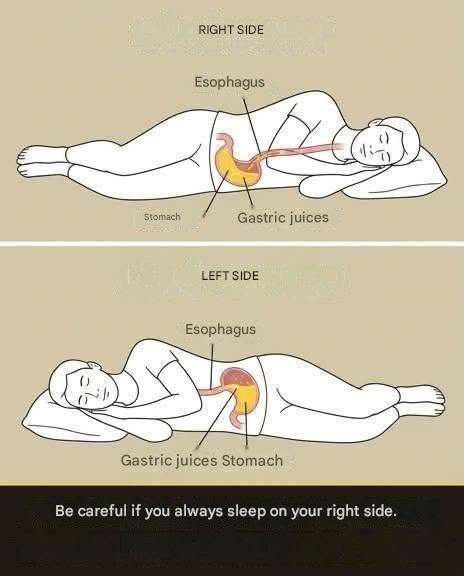
When lifestyle articles and wellness blogs try to finish a sentence like “Remember that if you always sleep on your right side, you…” they usually dive into an exaggerated list of warnings, claiming you are ruining your digestion, crushing your heart, or accelerating internal aging.
In clinical reality, sleeping on your right side is a completely normal, common position. For most healthy adults, your body naturally shifts and changes positions throughout the night, and choosing the right side carries no profound health hazards.
What the Internet Claims vs. Clinical Reality
Sensationalized wellness articles love to overstate minor physiological details:
-
The Digestion Myth: Some online sources claim right-side sleeping ruins digestion because of stomach anatomy. While individuals with chronic acid reflux (GERD) often find symptom relief sleeping on their left side (which keeps the gastric junction above the level of stomach acid), sleeping on the right side does not cause digestive disease in healthy people.
-
The Heart Strain Myth: Viral posts occasionally claim that right-side sleeping forces your heart to work against gravity. In reality, clinical cardiology shows that otherwise healthy adults experience no structural heart damage or strain from sleeping on their right side. (In fact, some patients with specific heart conditions actually find right-side sleeping more comfortable depending on their cardiac positioning).
When Side Choice Actually Matters
While right-side sleeping is generally fine, there are a couple of specific medical contexts where positioning is clinically relevant:
-
Pregnancy: Healthcare providers strongly recommend that pregnant individuals—especially in the later trimesters—sleep on their left side. This prevents the heavy uterus from placing excessive pressure on the inferior vena cava (the large vein returning blood to the heart), ensuring optimal blood flow to both the parent and the developing baby.
-
Severe Acid Reflux (GERD): If you suffer from frequent, troublesome nighttime heartburn, sleeping on your left side or elevating the head of your bed can help gravity keep stomach contents where they belong.
Optimizing Your Sleep Comfort
If you wake up stiff or sore from side sleeping, the culprit is usually physical support rather than which side you chose:
-
Support Your Neck: Ensure your pillow fills the gap between your mattress and your ear so your neck stays neutral.
-
Align Your Hips: Tucking a small pillow between your knees prevents your top leg from pulling your spine out of alignment, instantly relieving pressure on your lower back and hips.
The Bottom Line
You don’t need to panic if you wake up on your right side. Unless you are managing specific conditions like chronic heartburn or late-stage pregnancy, your body will naturally gravitate toward whatever position gives you the most restful, restorative sleep.
