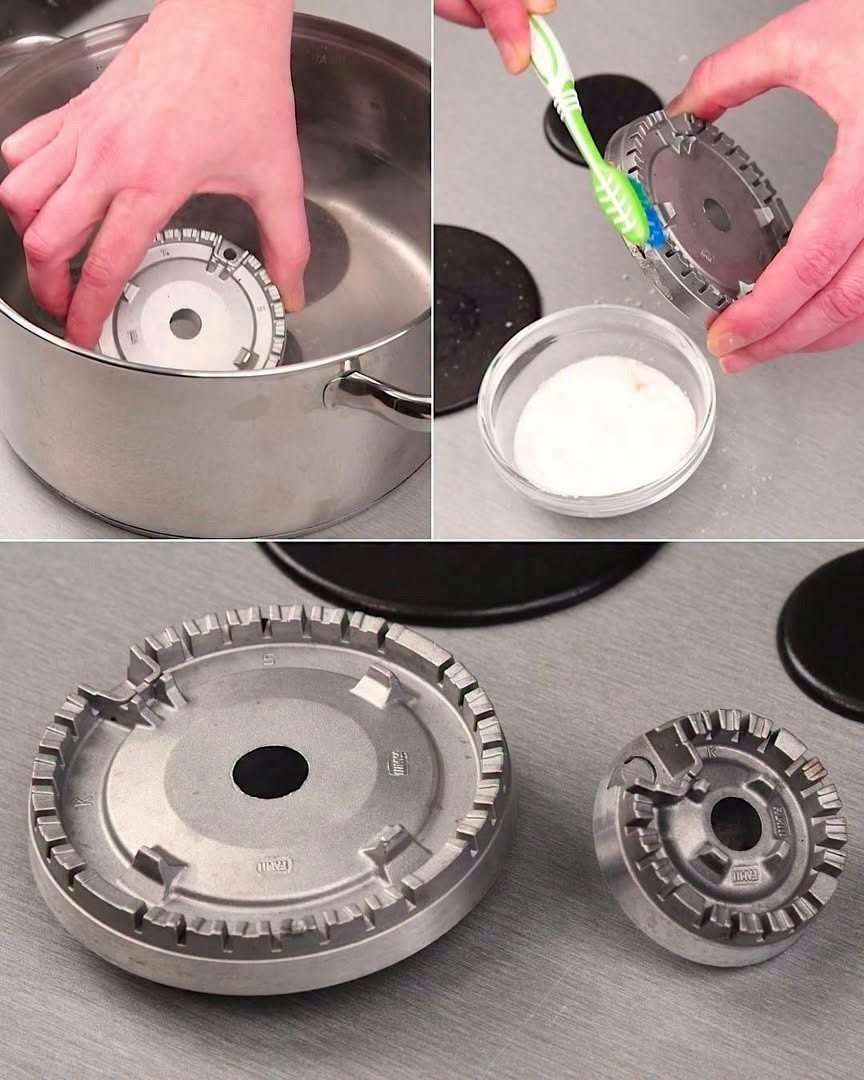
When viral cleaning videos and clickbait headlines promise that “you only need 2 natural ingredients” to make a heavily used gas stove top look brand new with zero effort, they rely on satisfying “clean-porn” transformation videos rather than the chemistry of carbonized grease.
While pantry staples like baking soda and vinegar have legitimate uses in the kitchen, packaging them as a magical, effortless shortcut to factory-new appliances ignores how grease actually behaves under high heat.
What Clickbait “Natural Stove Hack” Videos Get Wrong
-
The “Effortless Wipeaway” Illusion: Viral clips magically cut from spreading a paste to a pristine, gleaming surface, completely skipping the heavy elbow grease, scrubbing time, and physical agitation required to lift baked-on residue.
-
The Vinegar + Baking Soda Neutralization Trap: A classic internet cleaning trick tells you to mix baking soda (a base) and vinegar (an acid) together into a paste. While it creates a dramatic, fizzy volcano effect, chemistry takes over instantly: they neutralize each other. You end up with mostly water, carbon dioxide bubbles, and a neutral salt, throwing away the specific cleaning strengths of both ingredients.
The Practical Reality: The Chemistry of Burnt-On Grease
Materials scientists and professional cleaners look at stove top maintenance through the lens of thermal degradation:
-
Polymerized Oils (Carbonized Grease): When cooking oils splatter onto a hot gas burner and are heated repeatedly over weeks or months, they undergo a chemical reaction called polymerization. They cross-link and bake into a hard, plastic-like varnish. Mild household acids alone cannot dissolve this tough carbon layer.
-
The Power of Separation: Instead of mixing baking soda and vinegar together, use them sequentially if you want a natural approach:
-
Baking Soda (Alkaline & Mild Abrasive): Used dry or with a tiny splash of water, baking soda acts as a gentle scouring powder. Its fine crystals are softer than glass and porcelain, meaning it can mechanically buff away surface grime without scratching the cooktop finish.
-
Vinegar (Mild Acid): Vinegar is effective for cutting through mineral deposits, water spots, and light grease film on stainless steel or glass after the heavy carbon has been scrubbed away.
-
-
Surfactants and Degreasers: For heavy, baked-on burner grates, simple dish soap (which contains active surfactants that break the surface tension of grease) combined with a long hot-water soak or a dedicated commercial alkaline degreaser is vastly more effective than a DIY pantry paste.
The Bottom Line
You don’t need a secret two-ingredient internet potion to keep a gas stove clean. Real maintenance requires a mix of proper tools (like non-scratch scrub pads), targeted cleaning agents, and a bit of manual scrubbing to break down baked-on carbon. Skip the theatrical vinegar-and-baking-soda fizz, and focus on physical agitation and grease-cutting surfactants.
