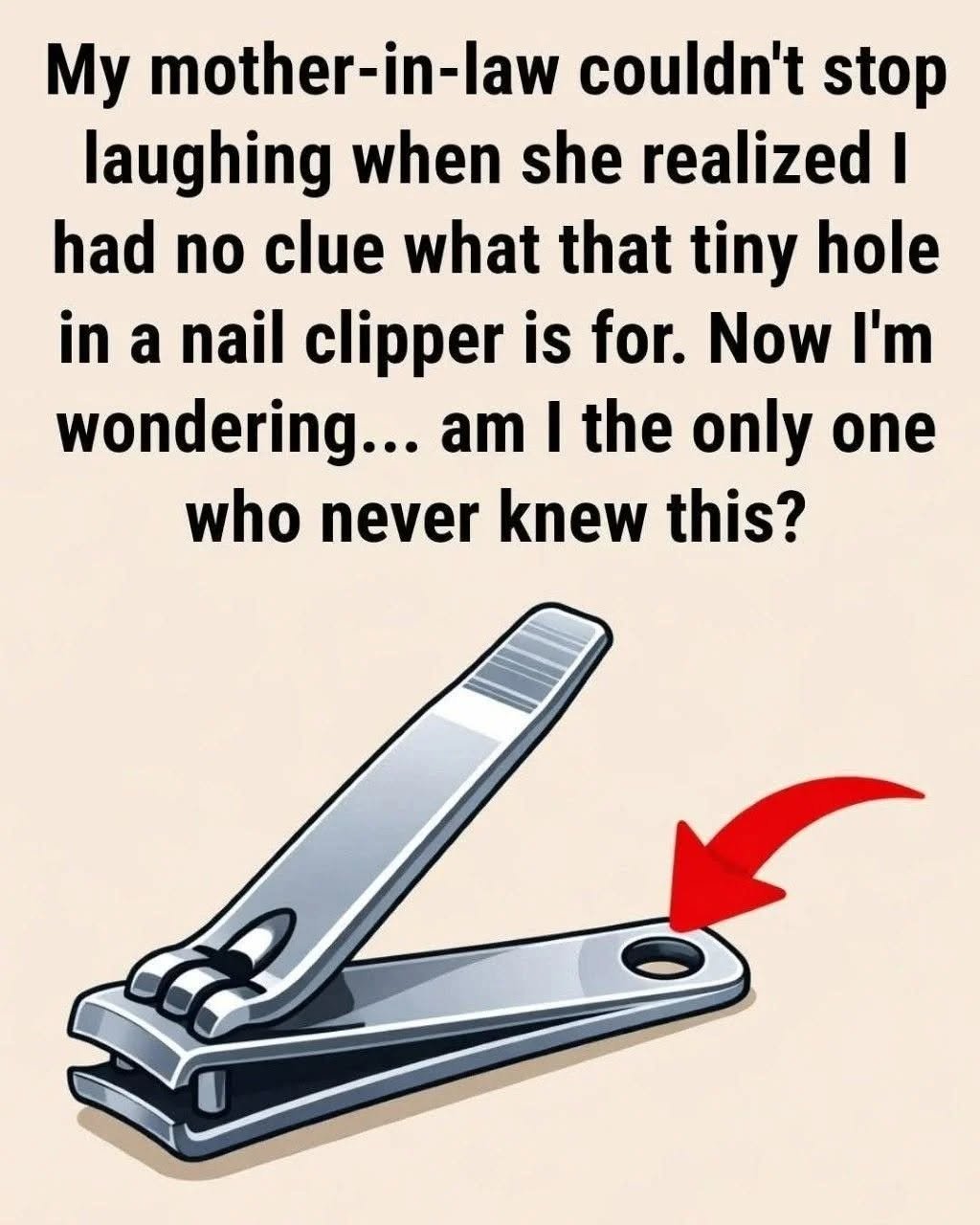
When viral videos and clickbait listicles scream, “Ever noticed that tiny hole on your nail clipper? Here’s what it’s actually for!”—framing it as a top-secret engineering marvel—they love turning an ordinary everyday object into a shocking revelation.
In reality, while the tiny hole at the end of the lever isn’t a hidden diagnostic tool or a magical life hack, it does have a straightforward, practical design history.
What Clickbait “Nail Clipper Hole” Myths Get Wrong
-
The “Secret Superpower” Fallacy: Viral posts often try to frame a basic manufacturing or attachment detail as a mind-bending trick that changes how you groom.
-
Wild Speculation: Internet theories range from bizarre ideas like a nail-clipping reservoir or a bottle opener to miniature storage compartments, completely missing the simple utility of the design.
The Practical Reality: Why the Hole Is There
Tool manufacturers and industrial designers include this feature for a couple of practical reasons:
-
Keychain and Lanyard Attachment: The primary purpose of the hole is to allow users to thread a small split ring, chain, or lanyard through it. Because standard nail clippers are small and notoriously easy to lose in the bottom of a drawer, travel bag, or glove compartment, this attachment point makes it easy to secure them to a key ring or hang them up in a medicine cabinet or workshop.
-
Manufacturing Utility: In many traditional stamping and assembly lines, holes like this can serve as holding or alignment points used during the fabrication, coating, and riveting process of the metal lever and base components.
The Bottom Line
The tiny hole on your nail clipper isn’t a hidden conspiracy or a secret multi-tool attachment—it’s simply a functional design feature meant to keep a small, easily misplaced grooming tool anchored to your keys or travel kit.
