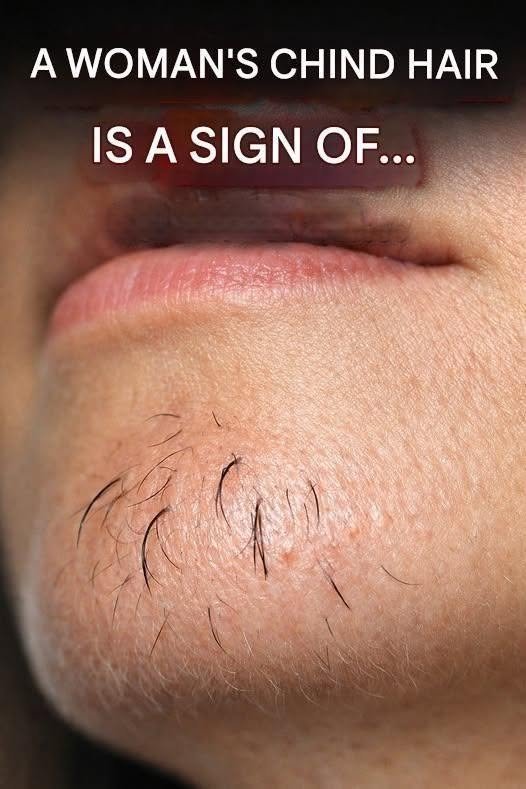
Finding a few stray hairs on the chin is a very common and completely normal occurrence for most women. However, when chin hair is coarse, dark, or appears suddenly in greater amounts, it can be a sign of several underlying biological shifts or medical factors:
1. Normal Aging and Hormonal Shifts (Menopause)
As women age—particularly leading up to and during menopause—estrogen levels decline significantly. Even though testosterone levels also drop with age, the ratio changes, leaving a dominant influence of androgens (male sex hormones that all women naturally produce in small amounts). This shift often transforms fine “peach fuzz” on the chin into coarser, darker terminal hairs.
2. Genetic and Ethnic Backgrounds
Genetics play a massive role in hair density and distribution. Women with certain family histories or ethnic backgrounds (such as Mediterranean, Middle Eastern, or South Asian descent) are naturally predisposed to having more prominent facial and body hair.
3. Hormonal Imbalances (Hirsutism and PMOS)
Medically referred to as hirsutism, excessive or coarse hair growth on the face, chest, or back is typically triggered by an excess of androgens or heightened sensitivity of hair follicles to those hormones. The most frequent medical cause is Polyendocrine Metabolic Ovary Syndrome (PMOS) (formerly known as PCOS), which can also be accompanied by irregular periods, stubborn acne, or weight fluctuations.
4. Other Underlying Medical Conditions
Less commonly, sudden or aggressive facial hair growth can point to conditions that alter hormone production, such as:
-
Cushing syndrome (high levels of the stress hormone cortisol)
-
Congenital adrenal hyperplasia (an inherited condition affecting adrenal gland hormone production)
-
Thyroid imbalances or rare hormone-secreting tumors of the ovaries or adrenal glands
5. Medication Side Effects
Certain prescription drugs can stimulate hair growth as a side effect, including minoxidil, certain steroids, or specific medications used for neurological and mood conditions.
When to See a Doctor
A stray coarse hair or two is usually nothing to worry about. However, you should consult a doctor or dermatologist if you notice a sudden, rapid increase in facial hair, or if the chin hair is accompanied by other symptoms like irregular menstrual cycles, adult acne, voice deepening, or thinning hair on the scalp.
