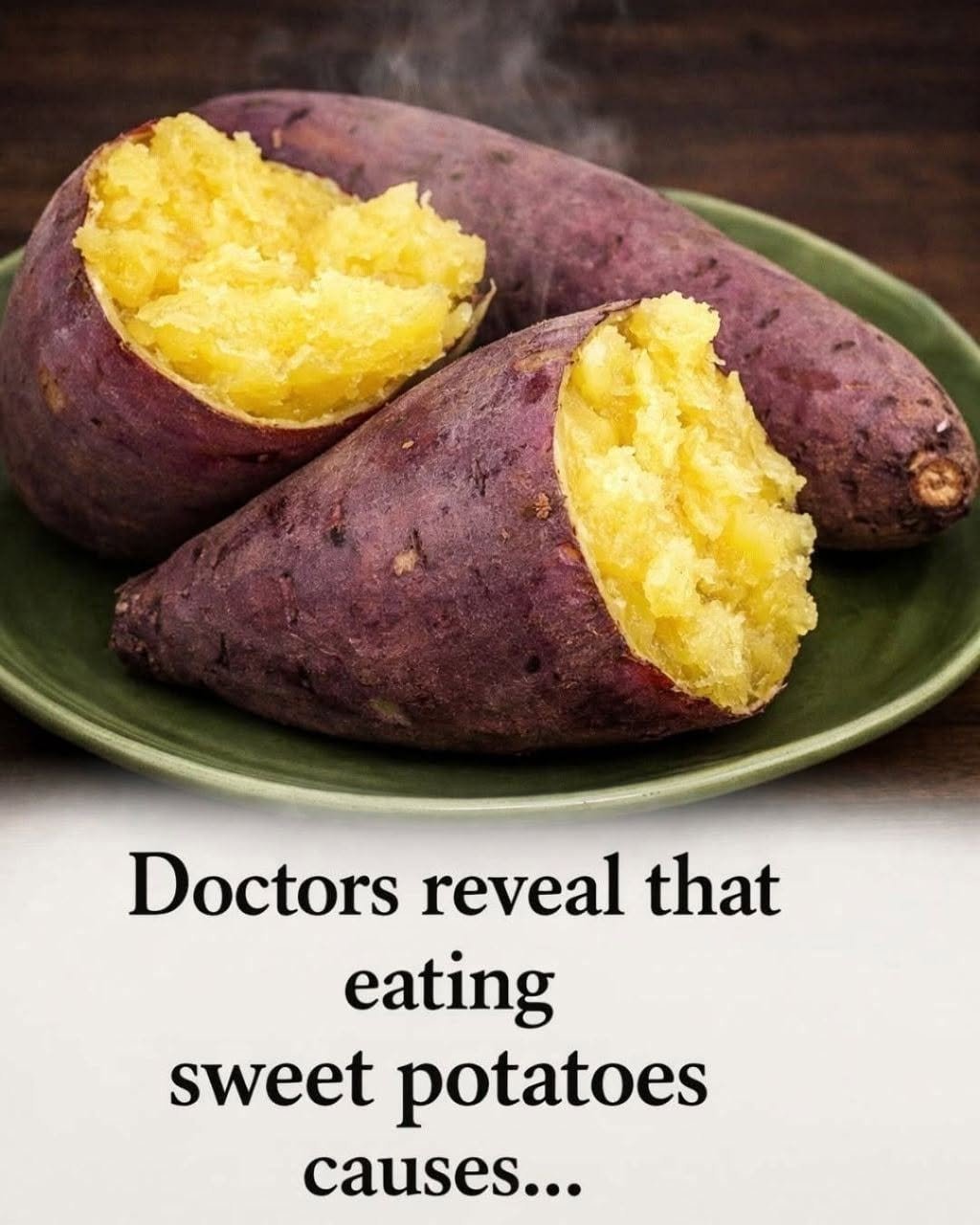
Sweet potatoes are widely praised as a nutritional powerhouse packed with fiber, vitamins, and antioxidants. However, doctors and nutritionists point out that eating them in excess—or for individuals with specific health profiles—can lead to a few unexpected physiological effects:
1. Carotenodermia (Temporary Orange Skin)
Sweet potatoes are exceptionally rich in beta-carotene, the pigment that gives them their bright orange color and which the body converts into Vitamin A. If you consume very large quantities regularly, excess beta-carotene can accumulate in the outer layers of the skin. This harmless condition, called carotenodermia, causes the palms of the hands and the soles of the feet to turn a yellowish-orange hue.
2. Blood Sugar Spikes (Depending on Preparation)
While sweet potatoes have a lower glycemic index than regular white potatoes when boiled or steamed, how they are cooked matters significantly. Baking, roasting, or frying them breaks down their starches into maltose, a sugar with a high glycemic index. Doctors caution that eating large portions of baked or roasted sweet potatoes can cause sharper-than-expected blood sugar spikes, which is an important consideration for individuals managing diabetes or insulin resistance.
3. Digestive Distress (Gas and Bloating)
Sweet potatoes contain high amounts of dietary fiber as well as natural sugars called polyols (sugar alcohols) and oligosaccharides. While fiber is fantastic for gut health, suddenly eating massive portions can overwhelm the digestive tract, leading to gas, bloating, stomach cramps, or acid reflux as gut bacteria ferment the excess carbohydrates.
4. Kidney Strain Due to Potassium and Oxalates
Sweet potatoes are rich in potassium and contain compounds called oxalates.
-
Potassium: For healthy individuals, potassium helps regulate blood pressure. However, for people with compromised kidney function, the kidneys cannot efficiently filter out excess potassium, leading to a dangerous buildup in the blood (hyperkalemia).
-
Oxalates: High-oxalate foods can contribute to kidney stone formation in individuals who are prone to calcium-oxalate stones.
5. Interaction with Certain Medications
Because they are rich in Vitamin K and potassium, eating very high amounts of sweet potatoes can occasionally interfere with specific medications—such as blood thinners (like warfarin) or certain blood pressure drugs—making moderation and consistency key if you are managing a chronic condition.
