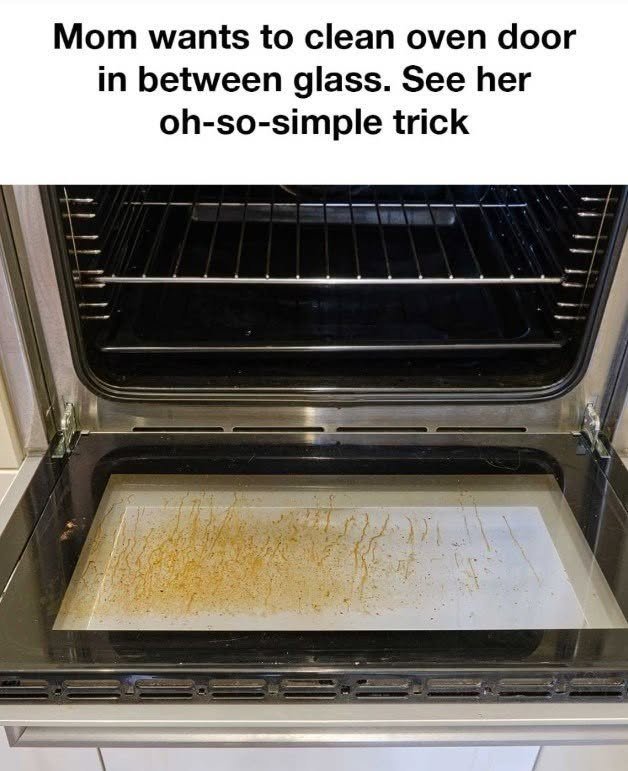
That classic viral cleaning hack is a total game-changer because it saves you from taking the entire oven door off its hinges!
When food drips or steam settles between the glass panes through the bottom or top ventilation slots, it leaves unsightly brown streaks that normal wiping can’t reach. Here is the simple trick to clean inside the glass without disassembling the door:
The “Spoon & Microfiber” Vent Trick
Supplies Needed
-
A long, slender handle: A wooden yardstick, a long wooden spoon, or a thin flyswatter.
-
A microfiber cloth or thin cleaning rag (avoid paper towels, which tear easily inside the door).
-
2 sturdy rubber bands.
-
Cleaning solution: Glass cleaner, or a warm water mixture with a few drops of dish soap or white vinegar.
Step-by-Step Instructions
-
Locate the Vent Slots: Look at the bottom of the oven door (or along the top/sides near the handle, depending on the model). You will see a row of narrow ventilation slots designed for airflow.
-
Build Your Cleaning Wand: Wrap the microfiber cloth tightly around the end of your wooden spoon handle or yardstick. Secure it firmly in place with two rubber bands near the base so the cloth doesn’t slip off inside the door.
-
Dampen (Don’t Soak) the Cloth: Lightly mist the cloth with glass cleaner or your warm soapy water solution. Tip: Make sure the rag is damp, not dripping, so liquid doesn’t pool at the bottom of the glass.
-
Slide and Wipe: Gently push the wrapped wand up through the bottom vent slots into the space between the glass panes. Move the stick side-to-side and up and down to scrub away the dust, grease, and streaks.
-
Dry & Buff: Swap out the damp cloth for a clean, dry microfiber towel, re-secure it to your stick, and slide it back inside to buff away any remaining moisture or streaks.
Safety Caution: Avoid using a metal wire coat hanger for this trick—metal can scratch the inside of tempered glass or cause micro-fractures that weaken the panel over time under high heat. A flexible wood, plastic, or silicon tool is much safer!
