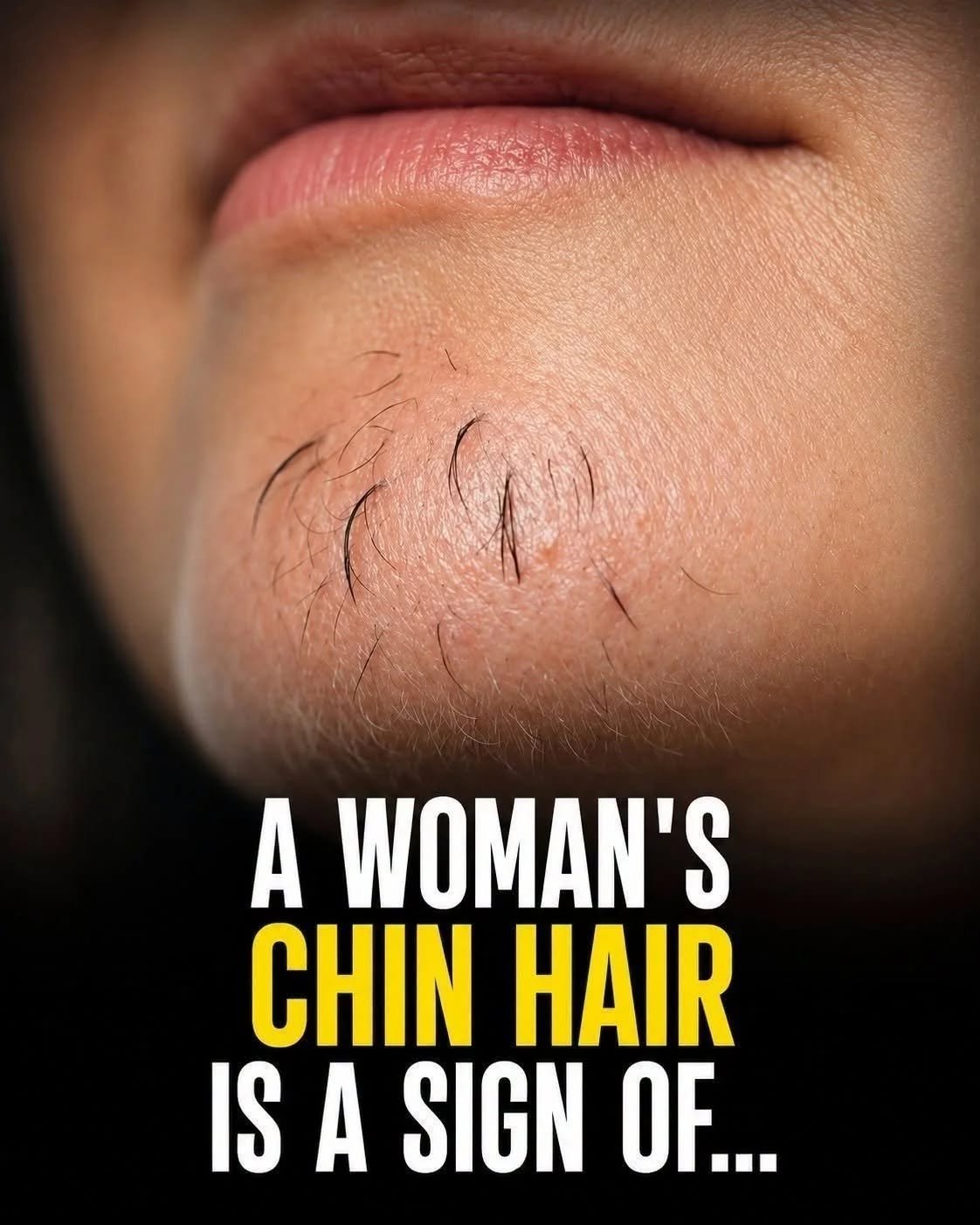
When sensationalized lifestyle articles tease that “a woman’s chin hair could be a sign of more than just aging, experts say,” they are weaponizing a common, completely normal physical occurrence to trigger anxiety. They typically frame a stray chin hair as a shocking red flag for severe internal disease or hormonal collapse.
While facial hair changes in women can be linked to shifts in endocrine function, they are rarely the mysterious medical emergency that clickbait makes them out to be. Understanding the actual biology of female hair growth helps separate normal physiological variation from clinical reality.
The Real Biology of Female Facial Hair
Every woman has fine, vellus hair follicles scattered across her face, including her chin and jawline. Hair growth is governed by a delicate balance of hormones, primarily estrogen, progesterone, and androgens (such as testosterone):
-
Androgen Sensitivity: While men produce higher levels of androgens, women’s bodies naturally produce them in smaller quantities. If hair follicles on the chin become slightly more sensitive to circulating androgens—or if the balance between estrogen and androgens shifts—fine vellus hairs can be stimulated to grow into coarser, darker terminal hairs.
-
Natural Life Transitions: This shift in hair texture is extremely common during specific biological milestones:
-
Perimenopause and Menopause: As estrogen levels drop sharply during the transition to menopause, the protective, counterbalancing effect of estrogen diminishes, allowing normal baseline androgens to exert a slightly greater influence on hair follicles.
-
Polycystic Ovary Syndrome (PCOS): In some cases, persistent or excessive coarse hair growth (hirsutism) on the chin, upper lip, or chest can be associated with PCOS, a common endocrine condition characterized by elevated androgen levels and irregular ovulation.
-
Genetics and Ethnicity: Baseline hair density and coarseness vary widely depending on genetic background and ancestry, making stray chin hairs a normal family trait rather than a pathology.
-
What Clickbait Articles Get Wrong
Sensationalized posts rely on scare tactics to generate clicks:
-
The “Toxic Internal Crisis” Myth: Articles often imply that any stray facial hair means your organs are failing or your body is overrun with toxins, ignoring the straightforward endocrinology of aging and hormone shifts.
-
Pathologizing Normal Variation: Framing every single chin hair as a disease sign ignores the fact that millions of healthy, perfectly balanced women naturally pluck or wax a stray coarse hair on their chin as part of routine grooming.
When to Consult a Professional
While a random stray hair is entirely benign, it is worth discussing with a primary care physician or gynecologist if facial hair growth is sudden, rapid, and dense (hirsutism), especially if it is accompanied by other symptoms such as irregular menstrual cycles, adult acne, voice deepening, or unexplained weight changes. If it is just a normal, gradual part of aging, simple grooming is all that is required.
The Bottom Line
Finding a coarse hair on your chin is a normal physiological byproduct of shifting hormones and aging—not an urgent medical warning sign. Understanding your body’s baseline helps you separate everyday human variation from internet alarmism.
