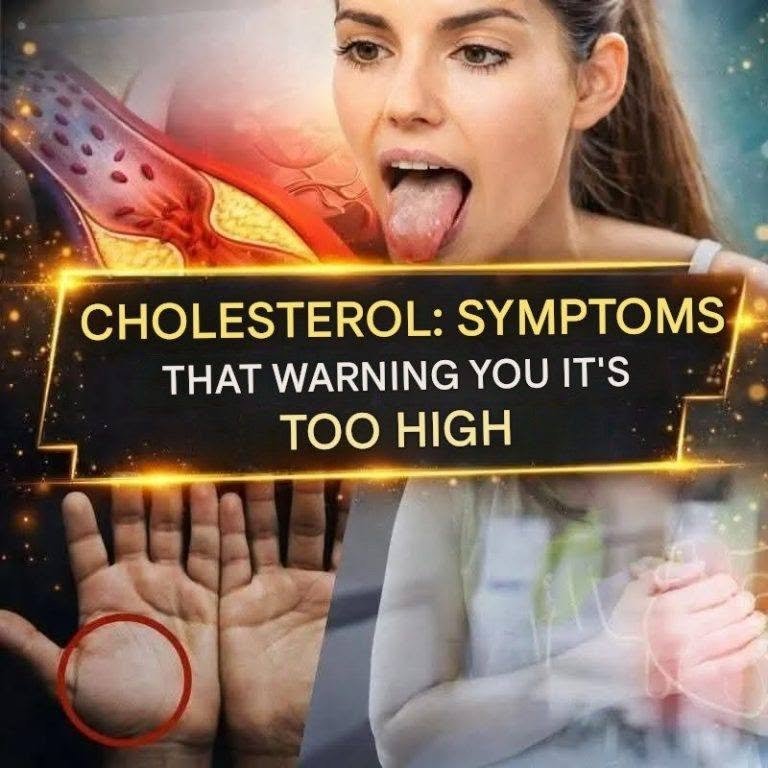
High cholesterol is famously called a “silent condition” because it typically develops over many years without causing any noticeable physical discomfort or warning signs. However, when elevated lipid levels begin to significantly narrow the arteries (atherosclerosis) or point to an underlying metabolic vulnerability, certain indirect signs or physical markers can manifest.
The first part of key warning signs and physical indicators associated with significantly elevated cholesterol includes:
1. Xanthelasma (Yellowish Deposits Near the Eyes)
-
What It Looks Like: Small, soft, yellowish patches or raised bumps that form underneath or on the skin directly around the eyelids.
-
Why It Happens: These are localized accumulations of cholesterol-rich fat deposits under the skin. While they are painless and harmless on their own, their presence strongly indicates an underlying lipid disorder or severely elevated blood cholesterol levels that warrant a formal blood test.
2. Arcus Senilis (A Ring Around the Cornea)
-
What It Looks Like: A distinct hazy white, gray, or yellowish-blue ring or arc appearing around the outer edge of the cornea (the clear front surface of the eye).
-
Why It Happens: This occurs when cholesterol and lipid fats gradually deposit into the outer edges of the cornea. While common in older adults as a normal part of aging (arcus senilis), finding this ring in younger individuals can be an external marker of high familial cholesterol.
3. Exertional Chest Tightness or Angina
-
What It Feels Like: A mild pressure, squeezing, fullness, or tightness in the center of the chest that tends to trigger during physical exertion, heavy activity, or acute stress, and typically subsides with rest.
-
Why It Happens: When low-density lipoprotein (“bad”) cholesterol builds up into hard plaque inside the coronary arteries, it restricts blood flow to the heart muscle. When the heart works harder during activity, it demands more oxygen-rich blood than the narrowed arteries can supply, resulting in angina.
4. Unexplained Shortness of Breath
-
What It Feels Like: Becoming winded or struggling to catch your breath during routine, low-intensity tasks—such as walking up a flight of stairs or doing light housework—that used to feel effortless.
-
Why It Happens: If coronary plaque buildup impairs the heart’s pumping efficiency, circulation slows down, and the cardiovascular system struggles to keep up with the body’s oxygen demands. This oxygen deficit mimics respiratory fatigue even when the lungs themselves are entirely healthy.
5. Persistent, Unexplained Fatigue
-
What It FeelsLike: A deep, systemic tiredness that doesn’t resolve with a full night of sleep, making everyday physical movement feel heavy or draining.
-
Why It Happens: Chronically restricted blood vessels force the heart and circulatory system to work drastically harder just to maintain baseline blood distribution. This constant internal strain diverts energy away from peripheral muscles and tissues, leaving the body feeling persistently exhausted.
