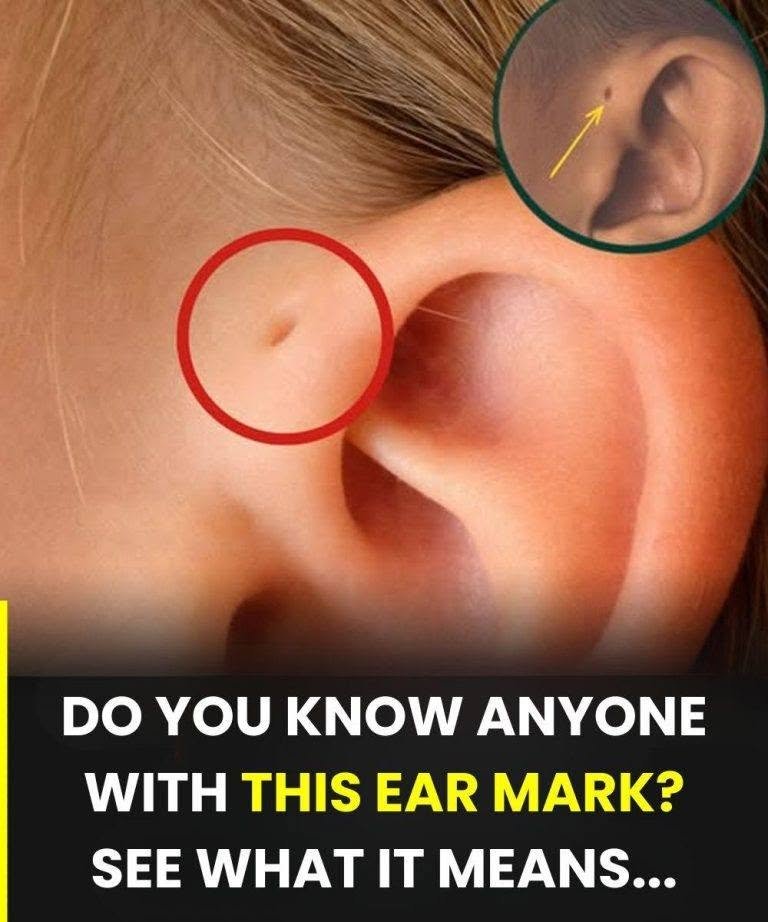
If the mark you are referring to is a distinct, diagonal crease or wrinkle running across the earlobe (extending from the front tragus down toward the edge of the lobe), it is medically known as Frank’s sign (or a diagonal earlobe crease).
First described by Dr. Sanders T. Frank in 1973, medical researchers have studied this crease extensively because observational studies have noted an association between it and an increased risk of cardiovascular disease (such as coronary artery disease) and age-related vascular changes.
Why Might It Be Connected to the Heart?
While researchers are still exploring the exact mechanisms, the leading theory involves structural and microvascular changes. The earlobe and the heart share similar microvascular networks. As small blood vessels and elastic fibers lose their elasticity and undergo micro-degeneration due to aging, decreased local blood flow, or atherosclerosis (plaque buildup), it can manifest visibly as a deep fold in the skin of the earlobe. Deeper creases, multiple lines, or creases present on both ears have sometimes shown a stronger statistical correlation in studies.
What It Means (And What It Doesn’t)
-
It is not a diagnostic tool: Having Frank’s sign does not mean someone definitely has heart disease, nor does it guarantee they will have a cardiac event. Many older adults develop skin creases simply as a normal part of aging, and plenty of people with healthy hearts have earlobe creases.
-
It’s a prompt, not a panic: Think of it less as a symptom and more as an interesting external marker. If someone notices it, it serves as a helpful reminder to focus on foundational cardiovascular health—such as monitoring blood pressure, managing cholesterol, eating a balanced diet, staying physically active, and keeping up with routine wellness exams.
