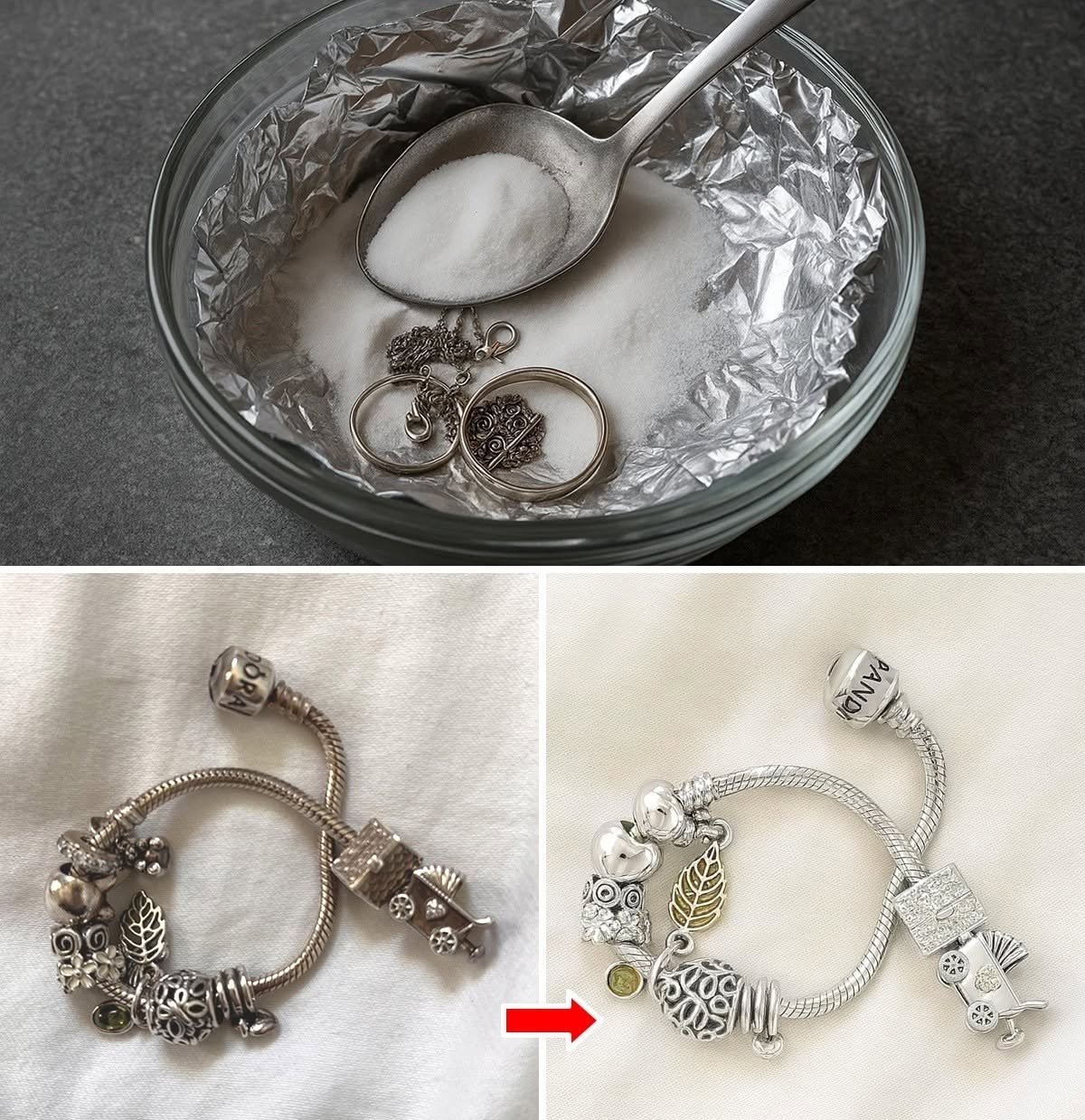
When lifestyle blogs and commercial advertisements promote harsh liquid chemical dips or aggressive abrasive pastes to restore blackened silver, they rely on methods that clean by destroying a microscopic layer of the actual metal.
In reality, silver tarnish is a surface chemical compound that can be reversed entirely at a molecular level using basic electrochemistry, requiring zero harsh scrubbing and zero metal loss.
What Harsh Silver Cleaners Get Wrong
-
The Abrasive Loss Trap: Traditional commercial liquid dips or cream polishes rely on fine micro-abrasives or strong acids that physically or chemically strip away a thin layer of real silver every single time you clean it, permanently thinning jewelry and flatware over years of use.
-
The “Elbow Grease” Myth: Internet hacks often advocate scrubbing silver with rough scouring pads or harsh DIY pastes, which leave behind microscopic scratches that dull the mirror finish.
The Materials Science Reality: Electrochemical Reduction
Metallurgists and materials scientists look at silver tarnish not as ordinary dirt, but as silver sulfide ($\text{Ag}_2\text{S}$). This dark, dull layer forms when silver atoms react naturally with trace sulfur gases in the air.
Instead of scraping or dissolving the silver away, the most elegant method uses electrochemistry:
-
The Galvanic Cell: When you submerge tarnished silver so that it makes direct contact with aluminum foil inside a hot electrolyte solution (baking soda and water), you create a mini electrochemical circuit.
-
The Redox Reaction: Aluminum has a much stronger chemical affinity for sulfur than silver does. Electrons flow from the aluminum to the silver, reducing the silver ions in the tarnish back into pure, elemental silver metal while transferring the sulfur atoms over to bond with the aluminum.
-
Zero Metal Loss: Unlike abrasive polishing, this process lifts the tarnish by converting it back into usable silver, preserving the structural integrity of your pieces.
How to Clean Silver Safely Using the Foil Method
-
Prep the Container: Line a glass bowl, ceramic dish, or your kitchen sink basin with standard kitchen aluminum foil, keeping the shiny side facing up.
-
Arrange the Silver: Place your tarnished silver items directly on top of the foil, ensuring they make direct physical contact with the aluminum surface.
-
Add the Electrolyte: Sprinkle roughly one to two tablespoons of baking soda (sodium bicarbonate) evenly over the silver items. (A small pinch of regular table salt can also be added to enhance ionic conductivity.)
-
Pour Hot Water: Carefully pour freshly boiled water into the container until the silver is completely submerged. The mixture will fizz slightly as the electrochemical reduction reaction begins.
-
Rinse and Buff: Watch as the dark tarnish vanishes (usually within seconds to a couple of minutes). Use tongs to remove the pieces, rinse them thoroughly under clean tap water, and gently buff them dry with a soft microfiber cloth.
Important Exceptions to Keep in Mind
-
Preserving Antique Patinas: If you own antique silver where the maker intentionally darkened the crevices (the “antiquing” or oxidation meant to provide contrast and depth), this electrochemical bath will strip it away uniformly, destroying the intended artistic detail.
-
Delicate Gemstones and Cements: Avoid submersing silver jewelry set with organic or porous stones (like pearls, opals, or amber) or pieces assembled with interior adhesives, as hot water and chemical immersion can damage them.
The Bottom Line
Cleaning blackened silver doesn’t require caustic chemical dips or scratching abrasives. By harnessing a straightforward electrochemical reaction with aluminum foil and baking soda, you can safely dissolve tarnish at a molecular level and bring back a brilliant, like-new shine without wearing down your valuables.
