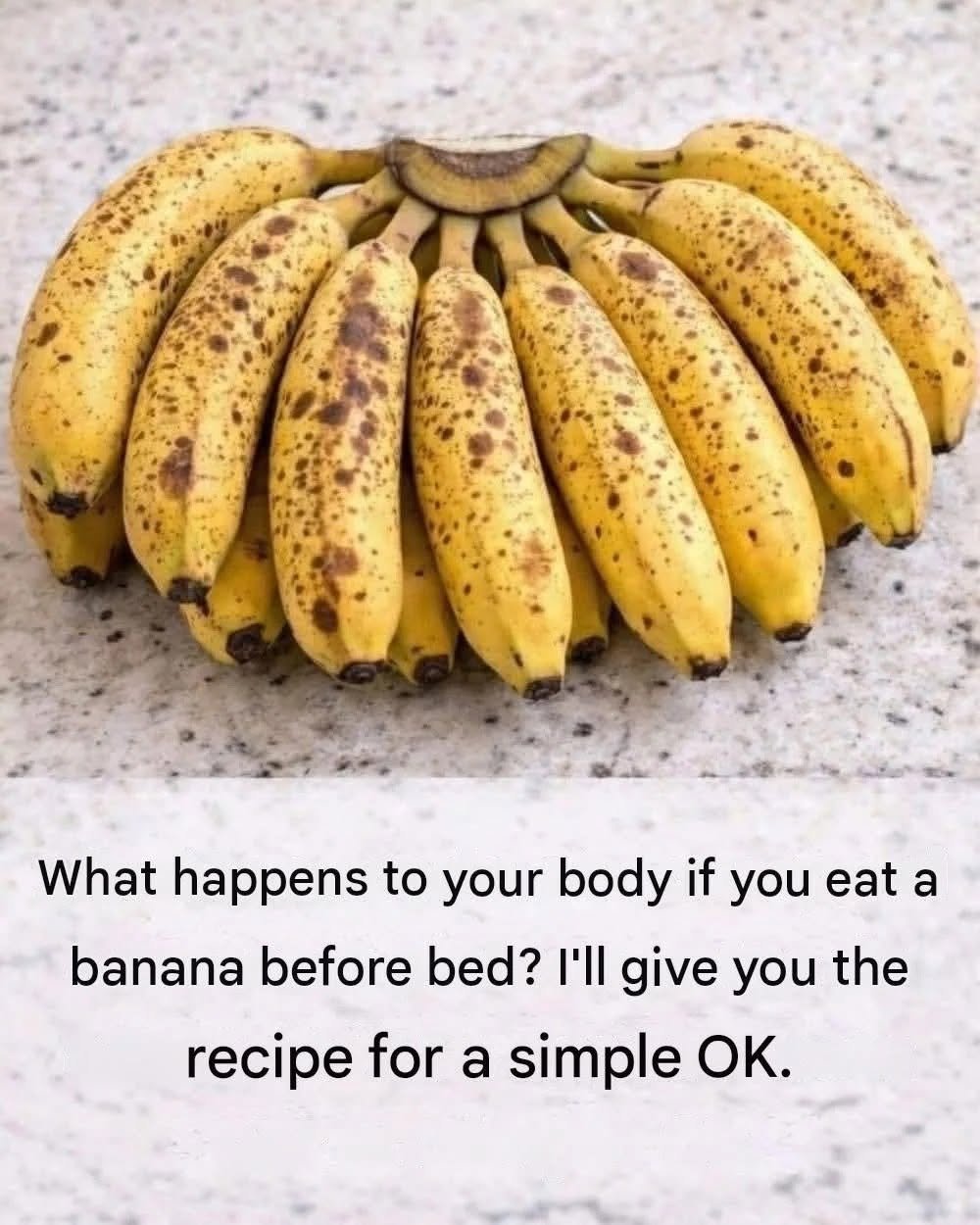
When clickbait health articles tease that eating a banana at night will cause some terrifying or dramatic outcome—usually hinting at sudden weight gain, blood sugar chaos, or a ruined metabolism—they are preying on the persistent myth that your body fundamentally forgets how to process food after dark.
The reality is that bananas are simply a whole food made of complex carbohydrates, water, fiber, and potassium. They do not undergo a sinister chemical transformation at midnight.
The Truth About Eating Bananas at Night
-
Metabolism Doesn’t Have a Curfew: Your body continues to burn calories and digest food while you sleep. Gaining weight is a matter of total daily caloric surplus over time, not the exact hour you ate a piece of fruit.
-
The Blood Sugar Myth: Unless you have a specific metabolic condition like diabetes, your body regulates blood glucose normally overnight. While bananas do contain natural sugars, the fiber content slows digestion, and pairing a banana with a small amount of protein or fat (like a spoonful of peanut butter) flattens any glucose spike entirely.
-
Potential Sleep Benefits: Interestingly, bananas actually contain nutrients that support sleep. They provide magnesium and potassium (which help relax muscles) and vitamin B6, which helps the body synthesize melatonin and serotonin.
Bananas are not a midnight hazard. If you are genuinely hungry before bed, a banana is a wholesome, easily digestible snack—no health disaster required.
