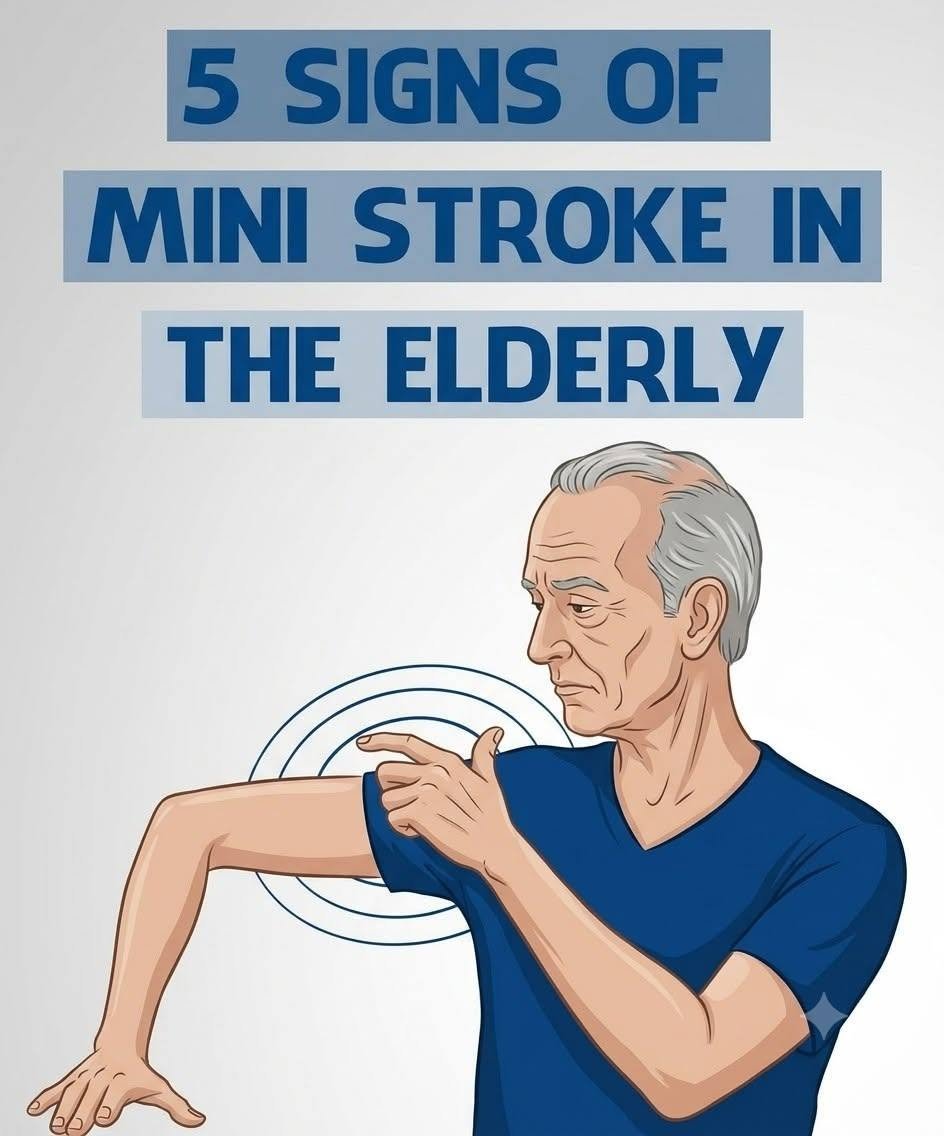
When health blogs and clickbait news feeds publish alarming titles like “Mini-Strokes Often Go Unnoticed: 9 Symptoms You Should Never Ignore,” they rely heavily on vague health anxiety. They want you to second-guess every minor dizzy spell, muscle twitch, or brief moment of mental fatigue, framing normal human sensations as hidden neurological disasters.
In clinical reality, a “mini-stroke”—medically known as a Transient Ischemic Attack (TIA)—is a genuine medical event, but it is defined by specific, distinct neurological characteristics rather than random daily discomforts.
What a TIA Actually Is (And Why It “Goes Unnoticed”)
A TIA happens when a blood clot temporarily blocks an artery in the brain, cutting off blood flow for a short period.
-
The Hallmark Feature: The symptoms mimic a full stroke—such as sudden weakness, slurred speech, or vision loss—but they resolve completely on their own within minutes to an hour as the clot dissolves or dislodges.
-
Why People Miss Them: Because the symptoms disappear so quickly, individuals often brush them off as “just fatigue,” a pinched nerve, or a weird spasm, failing to realize that a TIA is a critical warning sign of underlying vascular disease.
What Clickbait “Symptom Lists” Get Wrong
Sensationalized articles love to exploit fear by turning everyday occurrences into scary diagnostic traps:
-
Lumping in Unrelated Aches: Clickbait lists often categorize general tiredness, mild tension headaches, or occasional muscle stiffness as “silent mini-stroke signs.” These are common issues with countless harmless causes.
-
Ignoring the Rule of “Suddenness”: Vascular events do not slowly creep up over days as vague generalized feelings; true neurological deficits from a TIA or stroke happen abruptly, in seconds or minutes.
True Clinical Signs of a TIA (The B.E.F.A.S.T. Framework)
Clinicians rely on fast, objective indicators to spot acute cerebrovascular events. If any of these symptoms appear suddenly, they demand immediate medical evaluation:
-
Face Drooping: One side of the face suddenly feels numb or sags when trying to smile.
-
Arm or Leg Weakness: Sudden difficulty lifting an arm or leg, or an inability to hold objects on one side of the body.
-
Speech Difficulty: Sudden slurring, garbled words, or a total inability to articulate thoughts or understand speech.
-
Sudden Vision Changes: Blurred vision, double vision, or sudden partial or complete loss of sight in one or both eyes.
-
Sudden Balance Loss: Severe, unprovoked vertigo, sudden unsteadiness, or unexplained falls.
-
Sudden Severe Headache: An explosive, blinding headache with no known trigger.
-
Sudden Confusion: Abrupt disorientation or an inability to process what is happening around you.
-
Sudden Numbness: Unilateral numbness affecting the face, arm, or leg.
-
Sudden Coordination Failure: Inability to control fine motor skills or abrupt clumsiness.
The Bottom Line
Don’t let sensationalized articles trick you into panicking over normal daily fatigue. However, if you or someone near you ever experiences sudden neurological changes—even if they vanish within minutes—treat it as an emergency and seek medical attention immediately.
