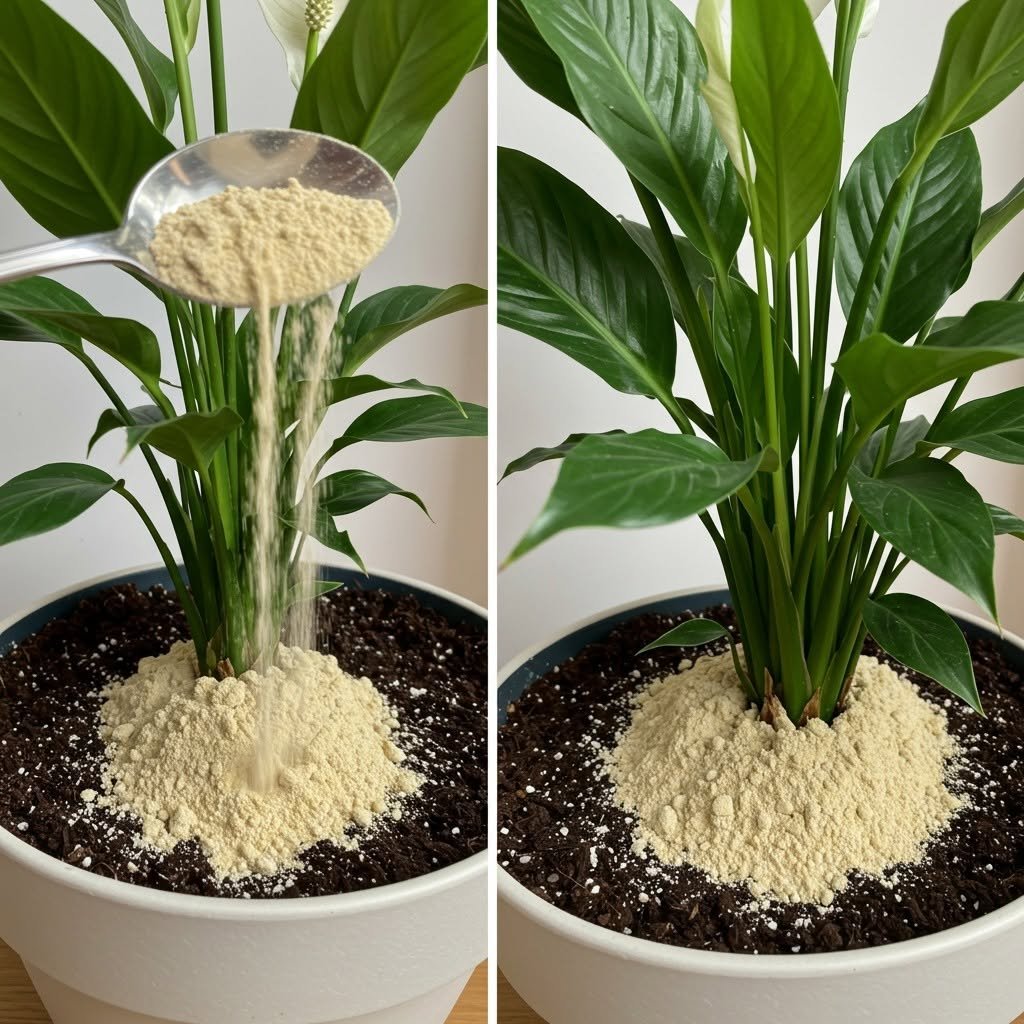
Viral gardening videos often claim a single household ingredient—like rice water, banana peels, cinnamon, or Epsom salts—acts as a magic potion to force a peace lily (Spathiphyllum) to flower continuously for a decade.
In reality, no single ingredient can guarantee 10 years of non-stop blooms. Peace lilies are tropical perennials that naturally cycle through active growth, flowering, and rest. Consistent blooms come down to mimicking their natural rainforest environment rather than relying on a kitchen trick.
Here is what actually drives a peace lily to bloom year after year:
1. Light Is the Real “Bloom Switch”
The single most common reason a peace lily refuses to flower is insufficient light.
-
While they survive in low-light corners, they will act strictly as foliage plants there.
-
To trigger flower production, they need bright, indirect sunlight (such as near an east- or north-facing window). Without adequate light energy, the plant cannot produce blooms.
2. Balanced Nutrition (Phosphorus)
While viral videos focus on single-ingredient hacks, flowering requires a balanced supply of nutrients—specifically phosphorus, which supports flower development. Over-fertilizing with high-nitrogen formulas results in large green leaves with zero blooms. A balanced, water-soluble houseplant fertilizer applied sparingly during spring and summer is far more effective.
3. Root Crowding (The “Potbound” Effect)
Unlike many houseplants that require frequent repotting, peace lilies prefer being slightly root-bound. When their roots are restricted in a snug pot, the plant directs its energy toward foliage and flower production rather than expanding its root system.
4. Consistent Moisture
Peace lilies wilt dramatically when thirsty, but repeated drought stress or waterlogged soil damages the root system and halts the blooming cycle. Keeping the soil consistently, moderately moist provides the best environment for steady growth.
