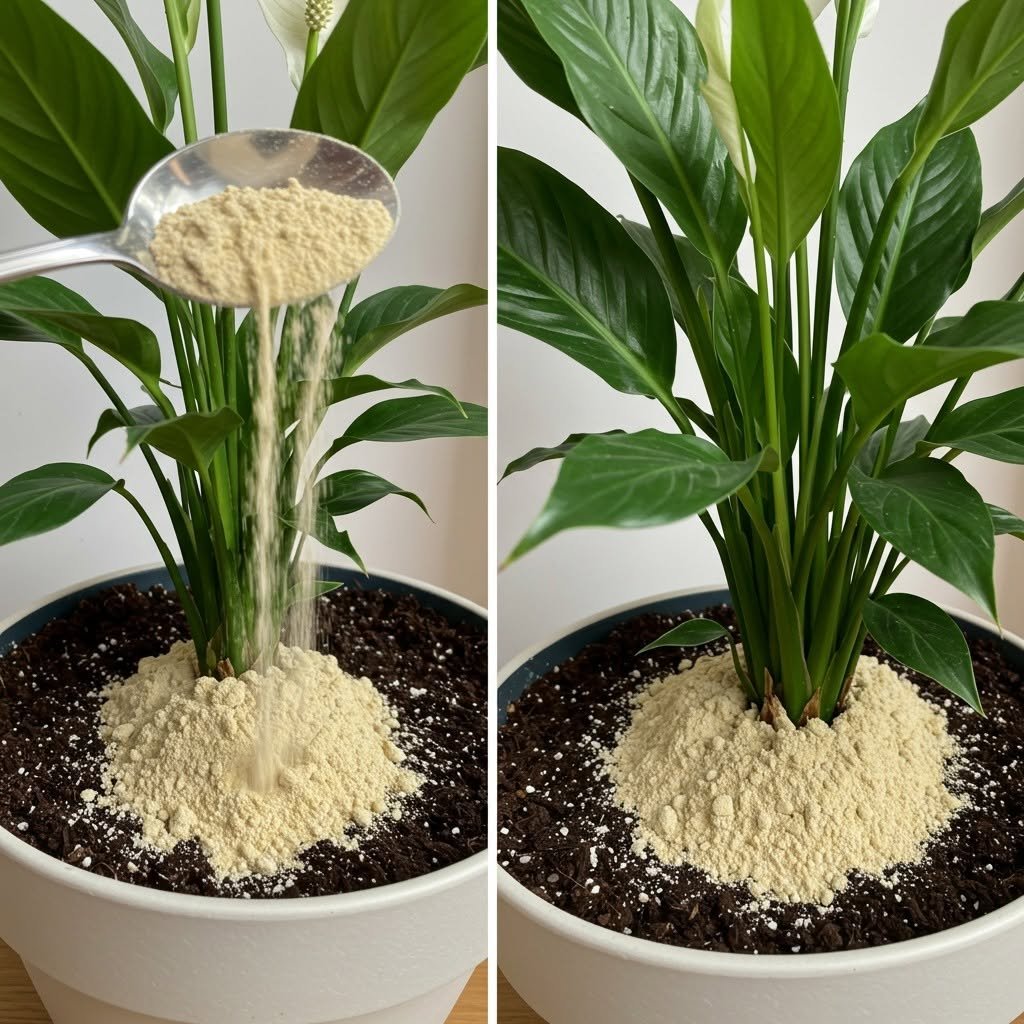
Viral gardening tips online love to promise that a single kitchen ingredient—usually a specific concoction of rice water, banana peels, Epsom salts, or cinnamon—will act as a “magic potion” to force a peace lily (Spathiphyllum) to bloom continuously for a decade.
In reality, no single ingredient can guarantee 10 years of uninterrupted blooms. Peace lilies are perennial tropical plants, and while individual plants can live for many years (sometimes decades) with proper care, they naturally go through biological cycles of active growth, flowering, and rest.
Achieving consistent blooms comes down to mimicking their native rainforest environment rather than relying on a secret trick. Here is what actually drives a peace lily to flower year after year:
1. Light Is the Real “Bloom Switch”
The single most common reason a peace lily refuses to flower is light.
-
While they are famous for surviving in low-light office corners or dim hallways, they will act strictly as green foliage plants there.
-
To trigger flowers, they need bright, indirect sunlight (such as a few feet away from an east- or north-facing window). Without adequate light energy, the plant lacks the fuel required to produce blooms.
2. Balanced Nutrition (Phosphorus)
While viral videos push single-ingredient hacks, flowering requires a proper ratio of nutrients—particularly phosphorus, which supports blossom development. Over-fertilizing with high-nitrogen formulas will only give you massive, lush green leaves with zero flowers. A balanced, water-soluble houseplant fertilizer applied sparingly during the spring and summer growing season is far more effective than random kitchen mixtures.
3. Root Crowding (The “Potbound” Secret)
Unlike many houseplants that demand immediate repotting the moment roots peek out of the drainage holes, peace lilies actually prefer being slightly root-bound. When their roots are restricted and cozy inside a tightly fitted pot, the plant shifts its energy away from expanding its root system and focuses instead on foliage and flowers. Repotting them into a massive container too often can actually stop them from blooming for a year or more.
4. Managing the “Drama Queen” Watering Cycle
Peace lilies are notorious for dramatic wilting when they get thirsty. While they bounce back quickly, letting them suffer through severe, repeated drought stress—or conversely, keeping them in waterlogged soil that causes root rot—shocks the plant and halts the blooming cycle. Consistent, moderately moist soil is the sweet spot.
