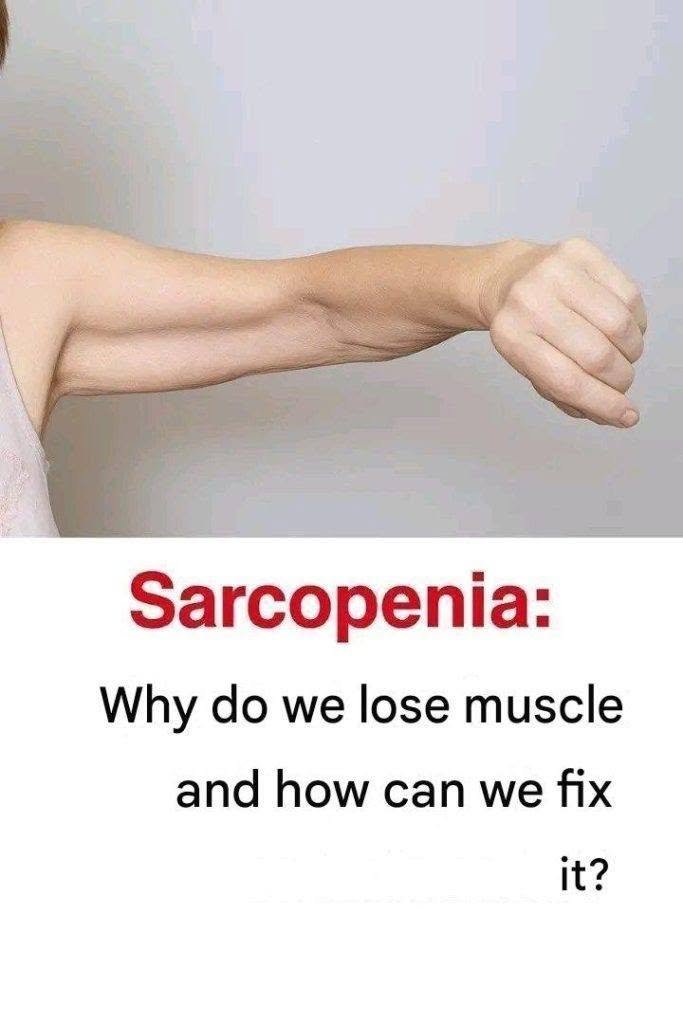
When wellness clickbait and health media flash headlines like “Sarcopenia: Causes of muscle loss and solutions,” they often alternate between panic-inducing warnings about your body dissolving and oversimplified gimmicks promising overnight transformations.
From a clinical gerontology, exercise physiology, and metabolic health perspective, sarcopenia is a natural and expected part of aging if left unaddressed, but it is entirely manageable and reversible through targeted, evidence-based lifestyle habits. Let’s break down the clinical reality, the actual root causes, and the proven solutions to protect and rebuild your muscle mass.
The Clinical Reality of Sarcopenia
What is actually happening beneath the surface as we age?
-
The Peak and the Plateau: Peak human muscle mass and strength are achieved in our late 20s or early 30s. From there, a gradual, natural decline begins—typically estimated at 3% to 8% per decade after age 30, with the rate of decline accelerating past age 60.
-
Anabolic Resistance: As we age, our muscle cells become less responsive to the building blocks of protein and mechanical stimulation (a phenomenon known as anabolic resistance). It takes slightly more targeted stimulus and nutrition to trigger muscle protein synthesis than it did in our youth.
-
The Disuse Multiplier: The single biggest driver of rapid muscle loss isn’t aging itself—it is disuse. Modern sedentary routines teach our bodies that muscle tissue is “optional,” accelerating functional decline and metabolic vulnerability.
The Core Causes of Muscle Loss
While clickbait blames mysterious factors, clinical medicine points to three primary drivers:
-
1. Mechanical Under-Stimulation (Lack of Resistance): Muscles adapt strictly to the physical demands placed upon them. Without mechanical tension, the body sees no metabolic reason to maintain heavy, energy-expensive muscle tissue.
-
2. Inadequate Dietary Protein and Poor Distribution: Insufficient total daily protein intake—or consuming it all in one heavy evening meal rather than distributing it evenly across the day—fails to overcome age-related anabolic resistance.
-
3. Chronic Low-Grade Inflammation (“Inflammaging”): Persistent systemic inflammation, often fueled by visceral fat, poor diet, and chronic stress, accelerates protein degradation and impairs muscle regeneration pathways.
Evidence-Based Solutions to Reverse Sarcopenia
You do not need grueling hours in a bodybuilding gym or expensive supplements to combat muscle loss. Clinical science emphasizes two foundational, highly effective interventions:
-
1. Progressive Resistance Training (PRT)
-
The mechanism: Muscles only grow and adapt when placed under mechanical tension. Challenge your muscles with resistance—using dumbbells, resistance bands, weight machines, or bodyweight exercises (like squats, wall push-ups, and step-ups)—at least 2 to 3 times per week.
-
The key: “Progressive” means gradually increasing the difficulty over time as your strength and capacity improve.
-
-
2. Optimized Dietary Protein and Distribution
-
The mechanism: Aim for adequate daily protein intake (roughly 1.2 to 1.5 grams per kilogram of body weight for active older adults) distributed evenly across meals—roughly 25 to 30 grams of high-quality protein per meal (from poultry, fish, eggs, dairy, beans, or lentils).
-
Micronutrient Support: Ensure optimal Vitamin D status, as adequate levels are essential for neuromuscular function and muscle contraction.
-
