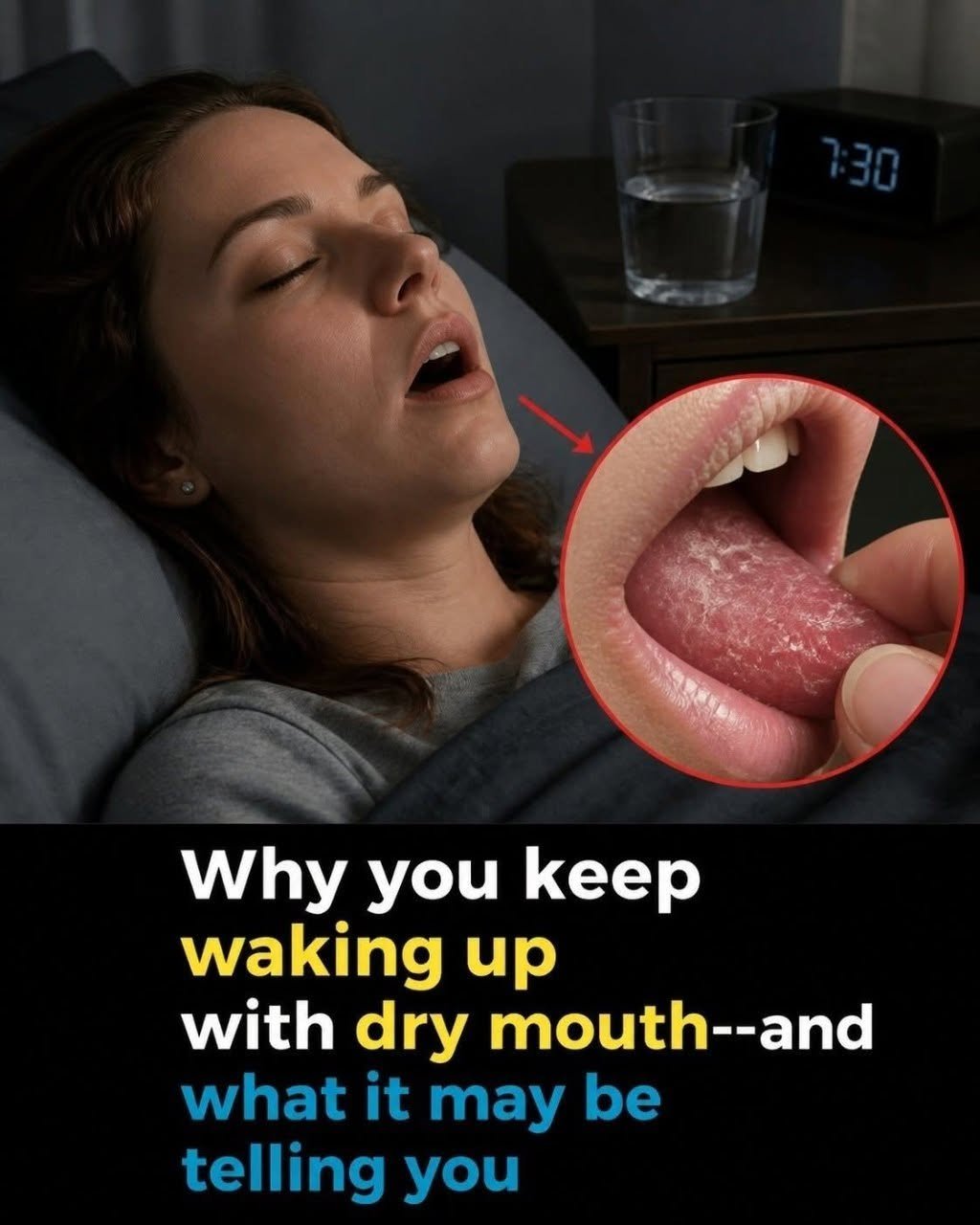
When sensationalized health clickbait flashes headlines like “Waking up with dry mouth? Here’s what your body might be telling you,” they love to frame a simple morning parched throat as a dark, cryptic message from deep within your organs. They want you to panic, imagining that a dry tongue is signaling impending systemic failure.
From a clinical otolaryngology and geriatric medicine perspective, waking up with a dry mouth (clinically known as xerostomia) does not mean your body is breaking down. Instead, it is almost always a literal physical response to how you breathed, what you drank (or didn’t drink) before bed, or how your evening medications interacted with your natural nighttime biological rhythms.
The Reality Behind Morning Dry Mouth
Why does your mouth feel like a desert specifically when you wake up, and what is your body actually telling you?
-
The Nocturnal Saliva Shutdown: Your salivary glands operate on a circadian rhythm. When you fall asleep, salivary output drops to its lowest level of the 24-hour cycle.
-
The Mouth-Breathing Factor: If mild nasal congestion, allergies, or sleep-disordered breathing causes you to sleep with your mouth open, passing air rapidly evaporates what little saliva your glands are producing overnight.
-
The Cumulative Medication Effect: As we have explored in our discussions on aging and medications, hundreds of common prescriptions—ranging from blood pressure drugs to antihistamines and mild sleep aids—possess anticholinergic properties. Taken in the evening, their drying effect peaks right when your saliva production is naturally at its lowest ebb.
What Your Body Is Actually Telling You (The Clinical Breakdown)
When persistent morning dry mouth occurs, clinicians look at a few straightforward physiological cues rather than mysterious pathologies:
-
1. “My Airway Needs Support”
-
What it means: Frequent mouth-breathing at night often points to nasal congestion, a deviated septum, or mild upper airway resistance during sleep.
-
-
2. “My Hydration Balance Dropped”
-
What it means: Inadequate fluid intake during the late afternoon and evening, or consuming diuretic substances like alcohol or excessive caffeine close to bedtime, leaves your tissues dehydrated by morning.
-
-
3. “My Evening Medications Are Interacting”
-
What it means: If you take multiple medications that dry out mucous membranes, your salivary glands are simply working under pharmacological suppression.
-
-
4. “My Environment Is Too Dry”
-
What it means: Low indoor humidity, especially during winter heating months or in air-conditioned bedrooms, actively pulls moisture from exposed mucous membranes while you sleep.
-
Evidence-Based Ways to Restore Morning Comfort
You don’t need expensive miracle tonics or panic-induced doctor visits to fix routine morning dry mouth. Clinical guidelines focus on simple, environmental, and behavioral adjustments:
-
Hydrate Steadily Throughout the Day: Sip water consistently rather than trying to chug a massive glass right before bed, which only interrupts your sleep with nighttime bathroom trips.
-
Introduce a Cool-Mist Humidifier: Running a humidifier in your bedroom adds ambient moisture to the air, preventing your saliva from evaporating rapidly while you sleep.
-
Practice Nasal Hygiene: If congestion forces you to breathe through your mouth, using a simple saline nasal spray or rinse before bed can encourage open nasal passages.
-
Protect Your Teeth: Because saliva is your mouth’s natural defense against decay, chronic dryness makes enamel vulnerable. Consider discussing high-fluoride toothpastes or over-the-counter moisturizing gels with your dentist.
