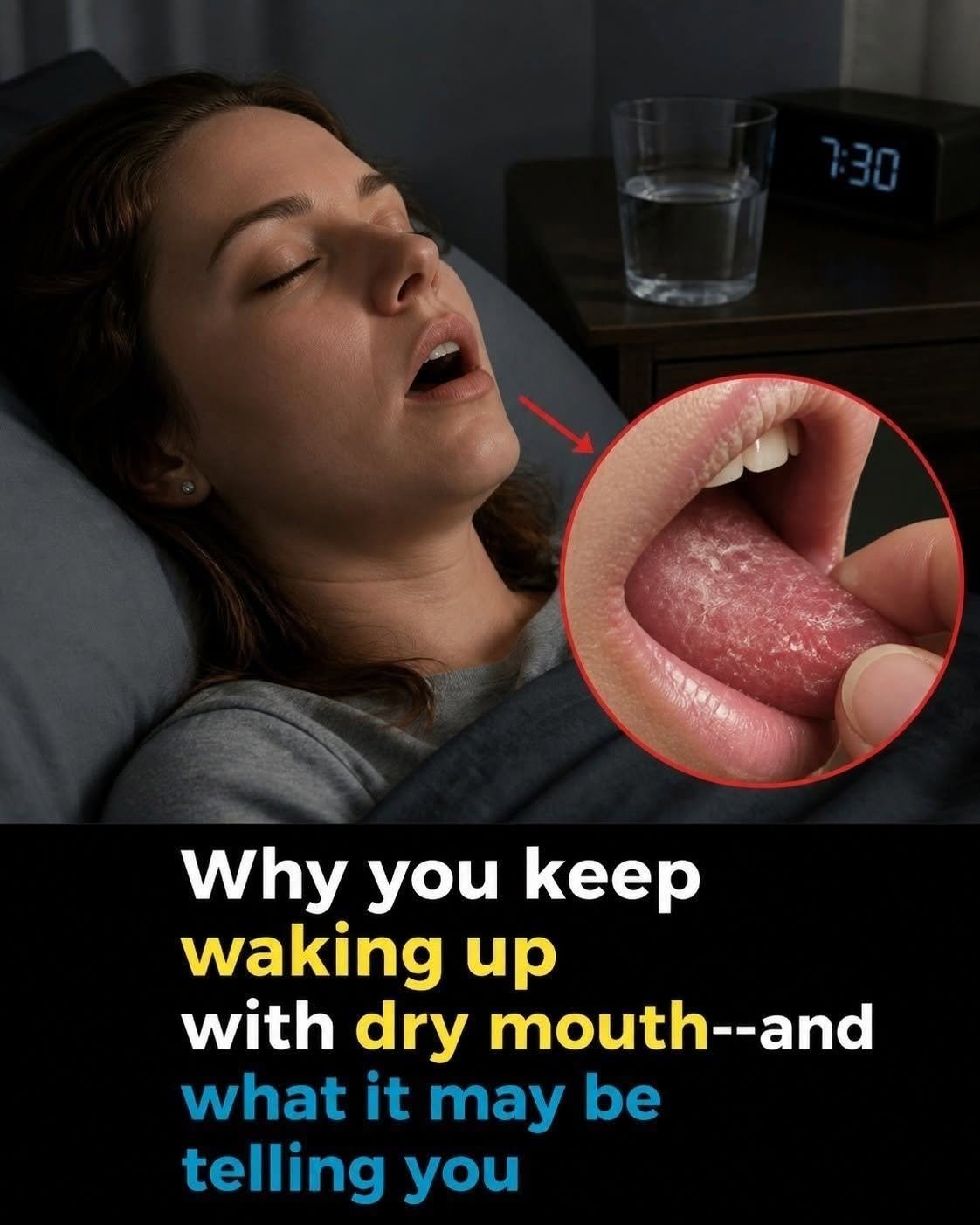
When health blogs and wellness sites use a headline like “Waking up with dry mouth? Here’s what your body might be telling you,” they often love to frame a common morning nuisance as a mysterious, alarming sign of systemic disease.
In clinical reality, waking up with a dry mouth (medically known as xerostomia upon waking) is remarkably common and usually has very straightforward environmental or physiological causes rather than a hidden medical emergency.
The Reality of Morning Dry Mouth
Your salivary glands naturally slow down their production while you sleep. When combined with how you breathe overnight, this temporary reduction in saliva can leave your mouth feeling parched by morning.
The most frequent culprits are everyday habits and environment rather than internal pathology:
-
Mouth Breathing: If you sleep with your mouth open—whether due to mild nasal congestion, seasonal allergies, a deviated septum, or a habit—airflow constantly passes over your oral mucosa, evaporating what little saliva is present.
-
Low Bedroom Humidity: Dry indoor air, especially during winter months when heating systems run constantly, pulls moisture right out of your airways and mouth while you sleep.
-
Evening Habits: Consuming alcohol, salty meals, or caffeine close to bedtime can contribute to mild dehydration overnight, reducing salivary flow.
What Clickbait Articles Exaggerate
Sensationalized wellness posts love to leap straight to extremes:
-
The “Immediate Organ Failure” Scare: Clickbait often implies that morning dry mouth is a secret, guaranteed neon sign for uncontrolled diabetes, severe autoimmune disorders (like Sjögren’s syndrome), or major neurological decline. While persistent, all-day dry mouth can sometimes be evaluated for specific medical conditions, a dry mouth upon first waking up is usually just a sign you breathed through your mouth or the bedroom air was dry.
-
The Medication Oversimplification: While certain prescription drugs (such as antihistamines, blood pressure meds, or antidepressants) are notorious for reducing saliva production, articles often frame normal prescribed drug side effects as sudden bodily poison.
Simple, Practical Ways to Fix Morning Dry Mouth
You don’t need complex medical interventions to soothe morning dryness. Simple adjustments usually clear it right up:
-
Hydrate Throughout the Day: Keep water within arm’s reach, and ensure you are steadily hydrated rather than chugging a massive glass right before bed (which just leads to middle-of-the-night bathroom trips).
-
Humidify Your Room: Placing a cool-mist humidifier in your bedroom adds moisture back into the air, preventing your airways and mouth from drying out overnight.
-
Address Nasal Airflow: If a stuffy nose forces you to breathe through your mouth, treating allergies or using saline nasal sprays before bed can help keep your nasal passages clear.
-
Protect Your Dental Health: Because saliva acts as your mouth’s natural defense against bacteria and tooth decay, keeping your teeth clean and using a fluoride or moisturizing mouthwash can protect your enamel if morning dryness is a chronic issue.
The Bottom Line
Waking up with a dry mouth is usually just a sign of dry air or mouth breathing overnight—not a hidden medical catastrophe. Adjusting your bedroom humidity and staying hydrated is typically all it takes to restore comfort.
