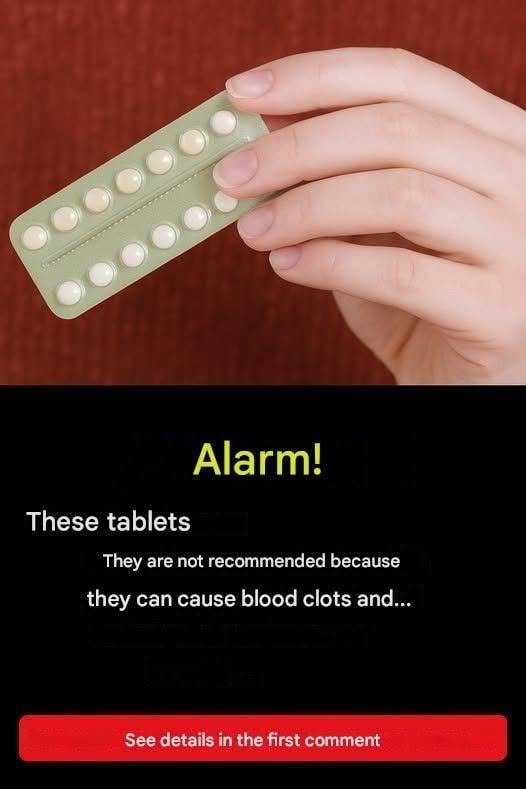
When sensationalized health articles or all-caps social media videos flash screaming warnings like “WARNING! THESE TABLETS CAN CAUSE BLOOD CLOTS, BLOOD THROMBOTS, AND HEART ATTACKS,” they rely on exploiting official medical terminology to manufacture sheer panic.
By stripping away context, clinical data, and individual health profiles, these headlines transform complex pharmacological safety data into clickbait designed to terrify readers about everyday prescription medications.
What Clickbait “Pill Danger” Warnings Get Wrong
-
The “Guaranteed Disaster” Fallacy: Clickbait treats rare, documented adverse side effects as an absolute certainty for anyone who takes the medication, ignoring the fact that the vast majority of patients take these drugs safely without incident.
-
Stripping Away Patient Context: Viral alerts completely erase the role of individual health history—such as pre-existing cardiovascular conditions, smoking status, genetics, or age—falsely implying that the pill alone acts in a vacuum.
The Clinical Reality: How Medication Risks and Warnings Actually Work
Pharmacologists, regulatory agencies, and physicians evaluate medication safety through a rigorous, evidence-based lens that looks very different from internet alarmism:
-
Understanding Boxed Warnings (Black Box Warnings): The U.S. Food and Drug Administration (FDA) uses boxed warnings as its most stringent safety alerts on medication packaging. These warnings are designed to draw strict attention to serious or rare potential risks—such as cardiovascular events or blood clots associated with certain drug classes (like certain NSAIDs, hormonal treatments, or targeted therapies). However, a boxed warning does not mean a drug is an active hazard; it means healthcare providers and patients must practice careful screening and monitoring.
-
Absolute Risk vs. Relative Risk: When clinical trials report an “increased risk” of a rare event, it is often a relative statistical measure. If a baseline condition affects 1 in 10,000 people and a medication raises that relative risk, the absolute chance of it happening to an individual patient remains exceedingly small.
-
The Risk-Benefit Calculus: Every single medical treatment—from over-the-counter pain relievers to advanced prescription therapies—involves balancing potential risks against therapeutic benefits. A medication that carries a known risk for a specific population can still be life-changing and entirely safe for someone else when properly screened and managed by a physician.
The Bottom Line
You should never make abrupt decisions to stop taking prescribed medications based on an all-caps internet warning. Real healthcare is personalized, context-driven, and managed by professionals who weigh your complete medical history against potential risks. If you ever have concerns about a specific prescription or want to review its safety profile, your primary care physician or pharmacist is the definitive source to consult.
For a closer look at how regulatory safety labels evolve as medical evidence advances, you can watch this discussion on FDA Black Box Warning Updates.
