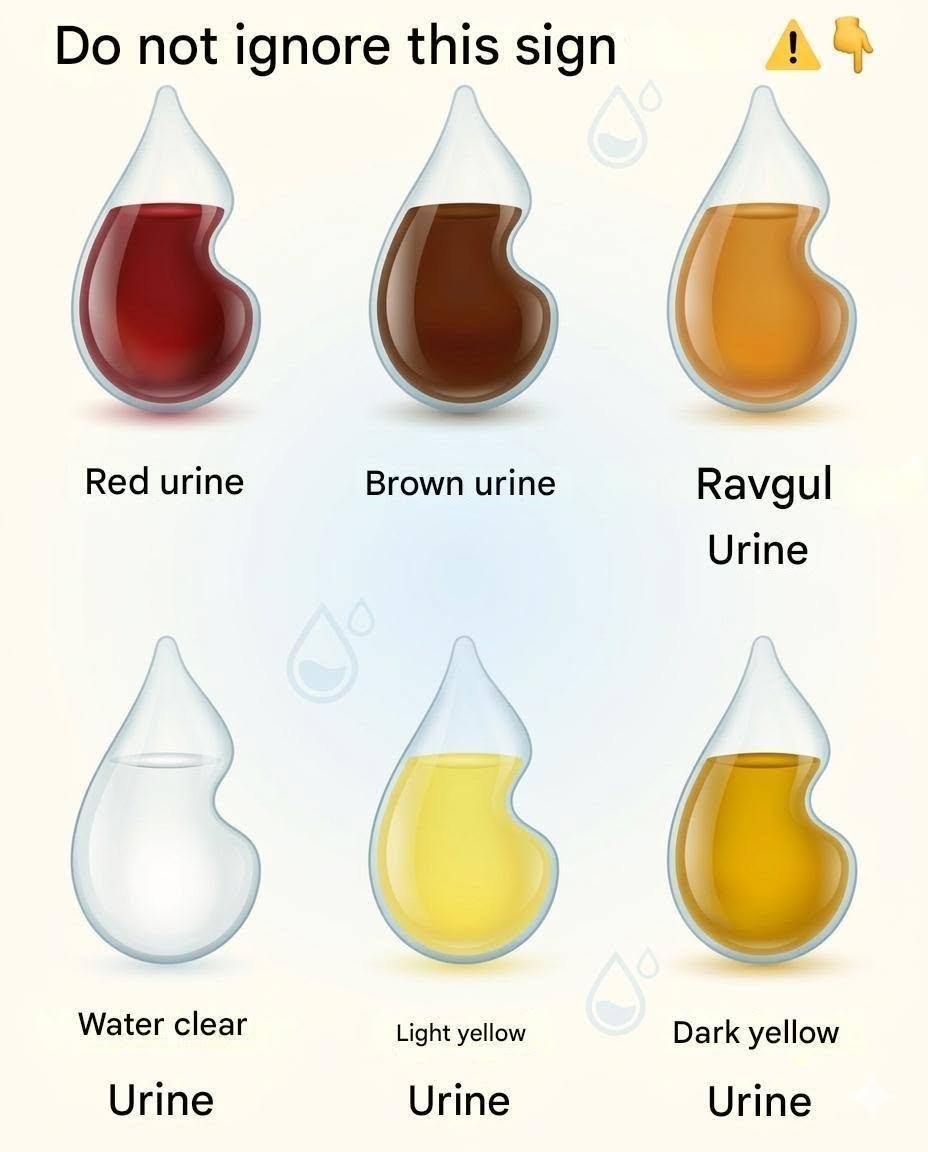
Your urine is a surprisingly reliable health monitor. Changes in its color, clarity, and even odor can offer immediate clues about your hydration levels, dietary choices, medications, and underlying medical conditions.
Here is what different urine colors reveal about what is happening inside your body:
1. Transparent / Clear
-
What It Means: You are likely drinking too much water.
-
The Takeaway: While hydration is essential, constantly clear urine can sometimes dilute important electrolytes (like sodium) in your bloodstream. Aim for a balanced, pale straw color rather than crystal clear.
2. Pale Straw, Transparent Yellow, or Honey (Optimal)
-
What It Means: You are ideally hydrated.
-
The Takeaway: A color ranging from pale yellow to the shade of light lemonade indicates that your body’s fluid balance is right where it needs to be.
3. Dark Yellow or Amber
-
What It Means: You are dehydrated.
-
The Takeaway: When you aren’t drinking enough fluids—or are losing water through heavy sweating or illness—your kidneys conserve water, causing urochrome (the pigment that gives urine its color) to become heavily concentrated. Time to drink a glass of water!
4. Brown, Cola, or Tea-Colored
-
What It Means: Severe dehydration, intense physical exertion, or potential liver or bile duct issues.
-
The Takeaway: If drinking water doesn’t quickly return your urine to a lighter shade, dark brown urine can indicate the presence of bilirubin (due to liver inflammation like hepatitis) or myoglobin from severe muscle breakdown (rhabdomyolysis). Consult a doctor if this persists.
5. Pink, Red, or Rust-Colored
-
What It Means: Dietary pigments, medications, or blood in the urine (hematuria).
-
The Takeaway: Did you recently eat beets, rhubarb, or blackberries? Certain foods and medications (like laxatives containing senna) can easily tint urine pink or red. However, if you haven’t eaten these foods, red urine can signal a urinary tract infection (UTI), kidney stones, or underlying issues that require medical evaluation.
6. Orange
-
What It Means: Dehydration, vitamin supplements, or specific medications.
-
The Takeaway: High-dose B-complex or Vitamin C supplements often turn urine a bright, neon orange-yellow as your body flushes out excess water-soluble vitamins. Certain medications (like the antibiotic rifampin or specific anti-inflammatory drugs) can also cause this.
7. Blue or Green
-
What It Means: Rare genetic conditions, specific medications, or food dyes.
-
The Takeaway: While startling, blue or green urine is almost always harmless—usually triggered by food colorings, certain medical dyes used in tests, or medications like the antidepressant amitriptyline or propofol.
When to See a Doctor
While diet, vitamins, and hydration easily explain most color shifts, you should consult a healthcare professional if you notice:
-
Persistent red, pink, or dark brown urine without a clear dietary cause.
-
Urine accompanied by burning, pelvic pain, cloudy appearance, or a strong, foul odor.
-
Unexplained changes that do not resolve with increased water intake within 24 hours.
