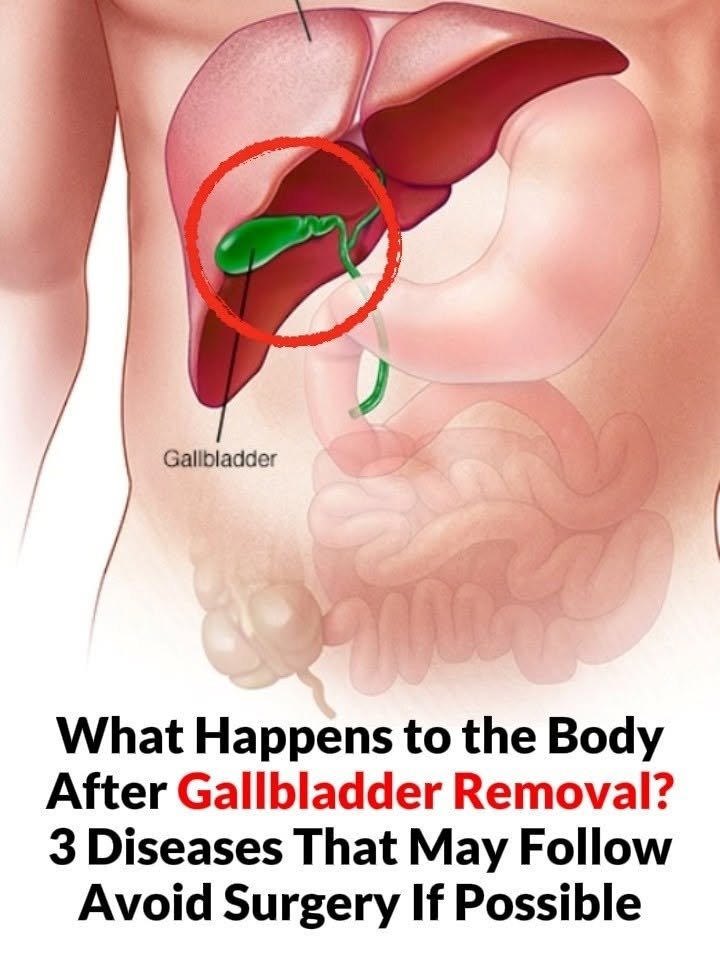
The gallbladder is a small, pear-shaped organ tucked beneath your liver whose primary job is to store and concentrate bile—the fluid your liver produces to help break down and digest fats. When the gallbladder is removed (a procedure called a cholecystectomy), your liver doesn’t stop making bile; it simply drips continuously and directly into your small intestine in a steady, unregulated stream.
While many people tolerate gallbladder removal well, losing this storage reservoir can permanently alter your digestive physiology. For some, the absence of regulated bile release leads to a cluster of chronic issues often referred to as Post-Cholecystectomy Syndrome (PCS) or related long-term complications.
3 Main Long-Term Conditions That May Follow Gallbladder Removal
1. Chronic Bile Acid Diarrhea (BAD)
-
What Happens: Because there is no longer a gallbladder to hold and concentrate bile, bile flows constantly into your intestines. When you eat a meal, especially one containing fats, excess unabsorbed bile acids spill into your colon. These bile acids act as a natural laxative, irritating the lining of the large intestine and drawing excess water in.
-
The Result: Chronic, urgent, watery diarrhea, persistent abdominal cramping, and bloating that can manifest months or even years after surgery.
2. Non-Alcoholic Fatty Liver Disease (NAFLD / MASLD)
-
What Happens: Clinical studies have increasingly observed a correlation between gallbladder removal and an elevated risk of developing hepatic steatosis (fatty liver). Without a gallbladder to help regulate lipid metabolism and smooth out the delivery of bile acids—which act as important signaling molecules for metabolic health—fat processing in the liver can become compromised, leading to increased fat accumulation within liver tissue.
-
The Result: Gradual stress on liver cells, potential elevation of liver enzymes, and increased metabolic strain.
3. Sphincter of Oddi Dysfunction (SOD) and Biliary Colic
-
What Happens: The Sphincter of Oddi is a muscular valve that controls the flow of digestive juices into your small intestine. When the gallbladder is gone, pressure dynamics in your biliary tract change. In some individuals, this muscle begins to spasm or malfunction, mimicking the exact upper-right abdominal pain, indigestion, and cramping that felt like original gallbladder attacks.
-
The Result: Recurring episodes of sharp upper abdominal pain, nausea, and digestive distress triggered by eating, even though the gallbladder itself has been removed.
Supporting Your Digestion If You No Longer Have a Gallbladder
If you have already had your gallbladder removed—or are looking for ways to support your biliary health and avoid surgery—adjusting how you eat can make a profound difference:
-
Embracing Smaller, Frequent Meals: Instead of overwhelming your system with three large, heavy meals (which requires a sudden surge of unregulated bile), eating 4 to 5 smaller meals helps match the continuous, slow drip of bile from your liver.
-
Moderate Healthy Fats: You don’t need a fat-free diet, but spacing out your fat intake prevents unabsorbed fats and bile acids from flooding your colon and causing diarrhea. Focus on easily digestible healthy fats like olive oil, avocado, and omega-3s rather than heavy, fried, or greasy meals.
-
Increasing Soluble Fiber: Soluble fiber (found in oats, chia seeds, psyllium husk, and cooked fruits) acts like a sponge in your digestive tract, binding to excess bile acids and helping form well-structured stools.
