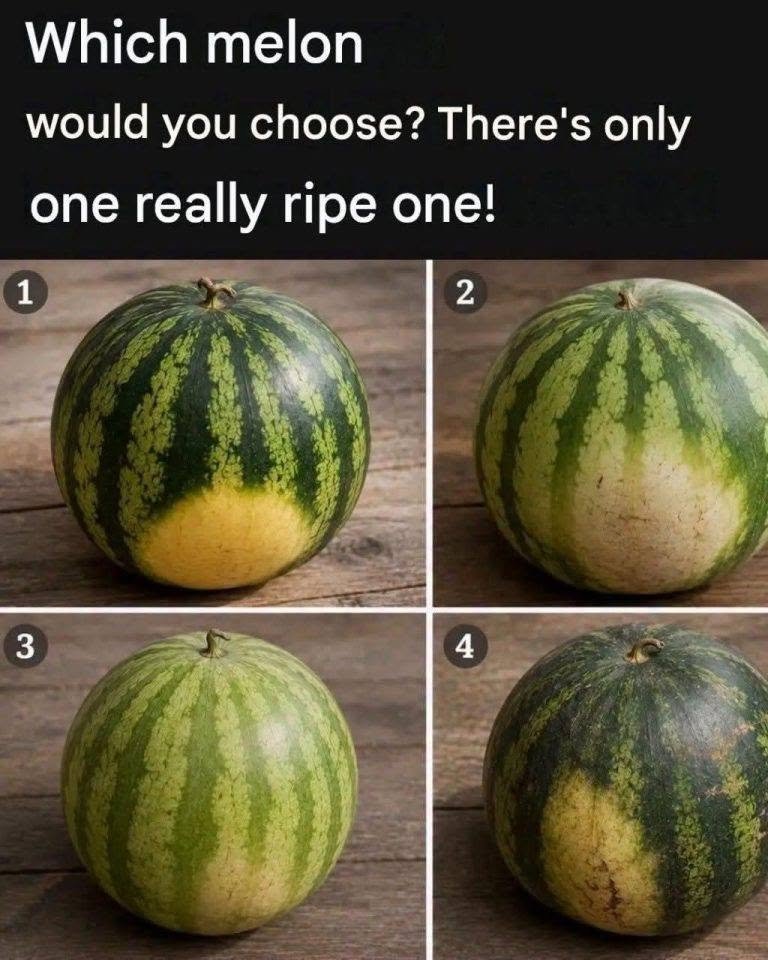
Social media visual quizzes frequently present a lineup of numbered melons—such as cantaloupes, honeydews, or watermelons—asking readers to spot the “one real winner” or perfectly ripe piece of fruit.
While these posts often treat it like a trick or luck, fruit growers and culinary experts rely on clear sensory indicators rather than guesswork. When picking between melons at the market, the single best choice is the one that passes these crucial freshness checks:
How to Spot the Truly Ripe Melon
1. For Cantaloupes (Muskmelons)
-
The Scent Test: The bottom end (opposite the stem) should smell sweet, musky, and fragrant. If it has no aroma, it was picked too early; if it smells overly strong or fermented, it is overripe.
-
The Webbing & Color: Look for a raised, thick net-like texture (webbing) over a golden-tan base hue. Avoid melons with green skin showing underneath the netting.
-
The Stem End: The stem cavity should be smooth and slightly indented, showing that the melon detached naturally from the vine (slipped) rather than being forcibly harvested.
2. For Watermelons
-
The Field Spot: Look for a large, creamy yellow spot where the watermelon rested on the ground to ripen under the sun. A white, pale green, or non-existent spot means it was harvested prematurely.
-
The Sound: Tap the center firmly with your knuckles. A sweet, perfectly juicy watermelon produces a deep, hollow thump, whereas an underripe or dry melon sounds dull or flat.
-
Skin Texture: A ripe watermelon should have a matte finish rather than a shiny outer rind, feeling heavy for its overall size due to high water content.
3. For Honeydew Melons
-
Rind Texture: A ripe honeydew feels slightly waxy or tacky to the touch rather than smooth and slick.
-
Color: Look for a warm cream, light yellow, or ivory hue rather than bright pale green.
