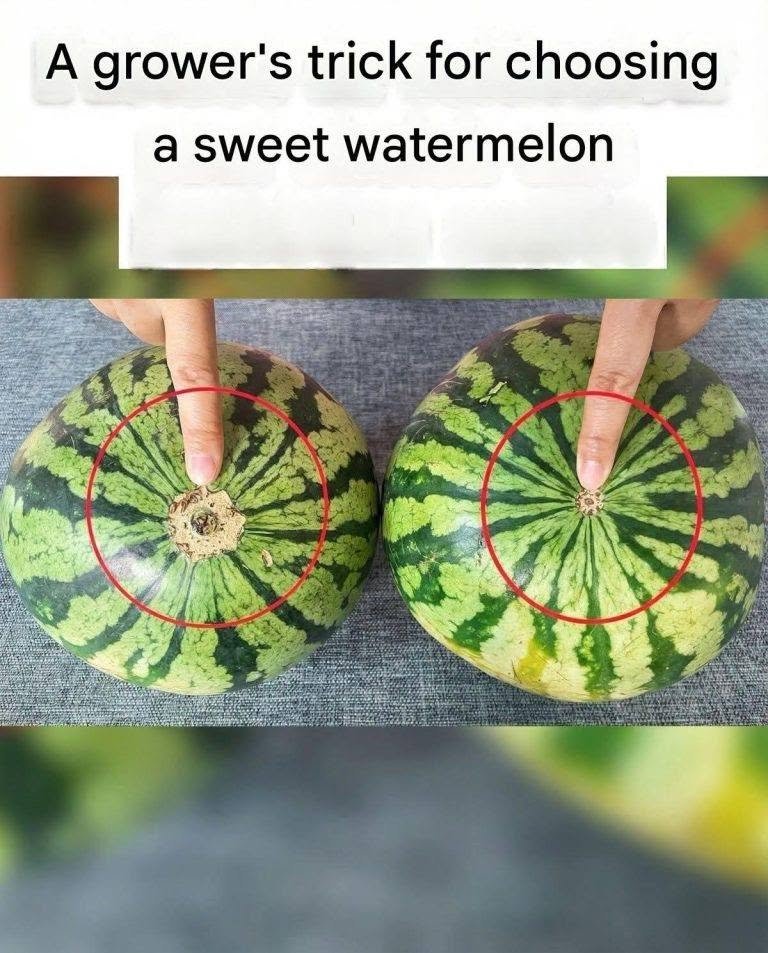
When grocery store displays fill up with massive mounds of fruit, picking a sweet, perfectly ripe watermelon can feel like playing a game of chance. Internet folklore is packed with “hacks”—from thumping the rind like a watermelon sommelier to examining the stem—but most of those tricks are unreliable guesswork.
Botanically and agriculturally, a watermelon leaves clear visual and physical clues on its exterior that reveal how long it ripened in the sun and how much sugar it accumulated.
The 4 Physical Markers of a Sweet Watermelon
Instead of relying on luck, experienced produce pickers evaluate four distinct agricultural indicators:
-
The Ground Spot (The Field Patch): Look at the underside of the melon where it rested on the soil. A stark white or pale green spot means the melon was picked prematurely and lacked sun exposure. A deep, creamy yellow or orange-yellow field spot indicates that the melon sat on the vine for weeks absorbing sugars and ripening fully in the sun.
-
Sugar Webbing (The Brown Scars): Those rough, web-like brown patches or lines on the rind (often resembling crusty scratches) are actually sugar scars. They happen when bees repeatedly pollinate the flower parts on the fruit’s surface, leaving behind sweet scarring that signals a high sugar content inside.
-
Rind Finish (Dull vs. Shiny): A ripe, field-ready watermelon has a dull, matte finish. If the rind is shiny and bright green, it is usually underripe and watery.
-
Shape and Density: Look for a round, heavy-for-its-size melon rather than a long, oval one. Round watermelons are typically female (sweeter and more uniform), while elongated ones tend to be more watery. Because watermelons are 92% water, a ripe one should feel surprisingly heavy when you lift it relative to its volume.
The Bottom Line
Forget the hollow thumping test—it tells you very little about actual sugar accumulation. Next time you’re at the market, flip the melon over to check for a deep yellow-orange patch, look for rough sugar webbing, and choose the heaviest, dullest-looking round melon in the bin.
