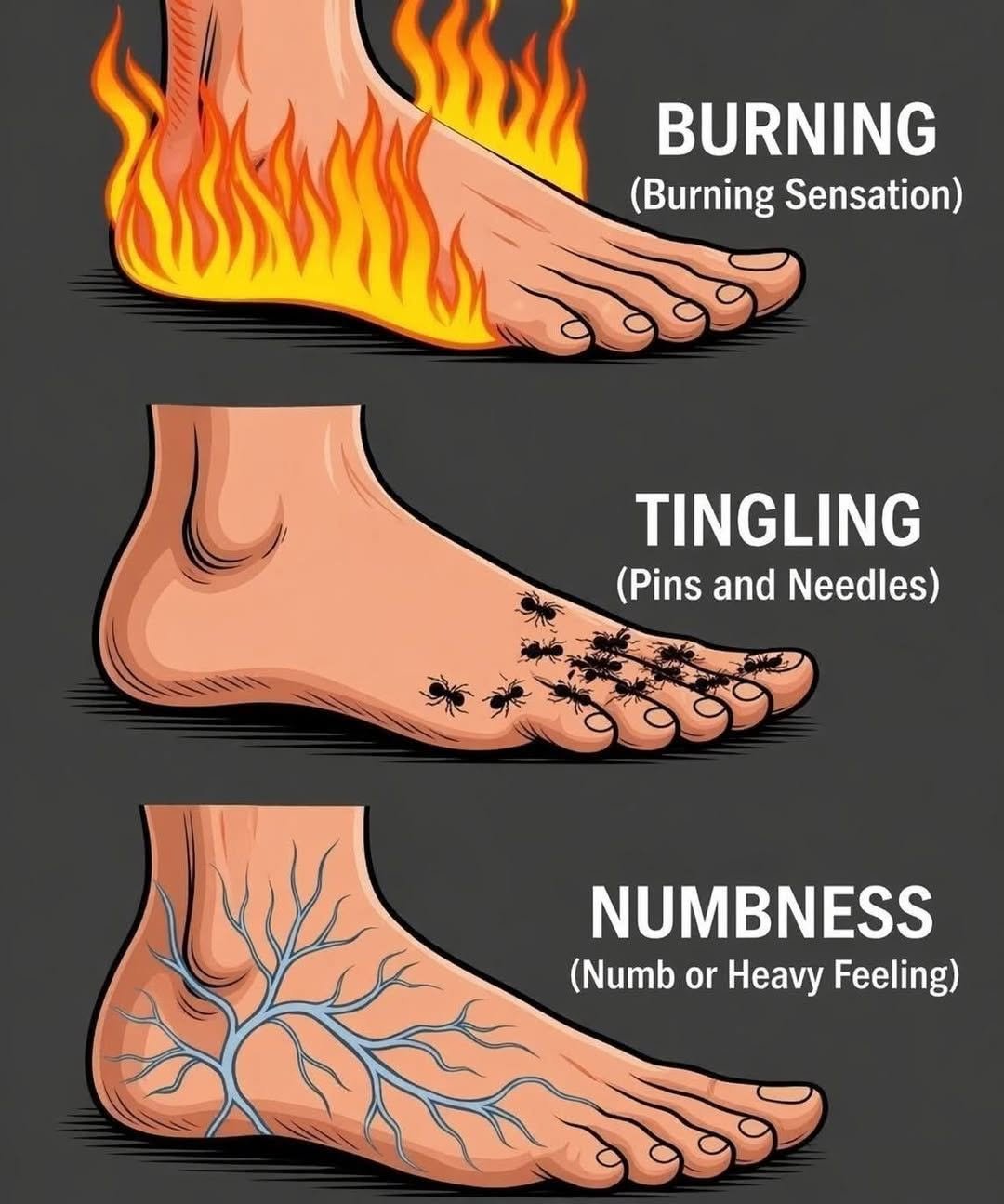
When clickbait headlines promise that a specific list of foot symptoms points to a single, terrifying underlying condition, they rely on classic fear-mongering.
Your feet are complex structures containing a quarter of all the bones in your body, along with a dense network of nerves, blood vessels, and joints. Because they bear your entire weight and sit the farthest from your heart, they act as an early warning system for a wide variety of completely distinct issues—ranging from simple footwear irritation and vitamin deficiencies to circulation and nerve conditions. Grouping nine disparate symptoms together as if they all mean one secret disaster is pure digital clickbait.
What Different Foot Symptoms Actually Indicate
Instead of assuming the worst, looking at specific categories of foot symptoms reveals how varied their actual causes are:
-
Numbness, Tingling, or Burning: Often associated with peripheral neuropathy, which can be linked to long-term diabetes, vitamin $B_{12}$ deficiencies, or compressed nerves (like tarsal tunnel syndrome).
-
Cold Toes or Pale Skin: Usually points toward poor peripheral circulation, peripheral artery disease (PAD), or simply being sensitive to cold environments.
-
Persistent Joint Pain or Stiffness: Frequently tied to forms of arthritis, such as osteoarthritis or gout (which commonly flares up in the big toe joint due to uric acid crystals).
-
Painful Heels (Especially First Thing in the Morning): The hallmark of plantar fasciitis, caused by inflammation of the thick band of tissue running across the bottom of your foot.
-
Swelling (Edema): Can be caused by standing for too long, a minor sprain, or systemic issues like venous insufficiency, heart, kidney, or liver fluid retention.
When to Take Foot Symptoms Seriously
Your feet often tell the story of your overall systemic health, but they require proper clinical context rather than panic-inducing internet lists. You should have a doctor or podiatrist evaluate your feet if you notice:
-
Pain that doesn’t improve with rest, better shoes, or basic stretching.
-
Sores, ulcers, or cuts on your feet that are slow to heal (especially critical for individuals with diabetes).
-
Sudden, unexplained swelling, redness, or warmth in one foot or ankle.
