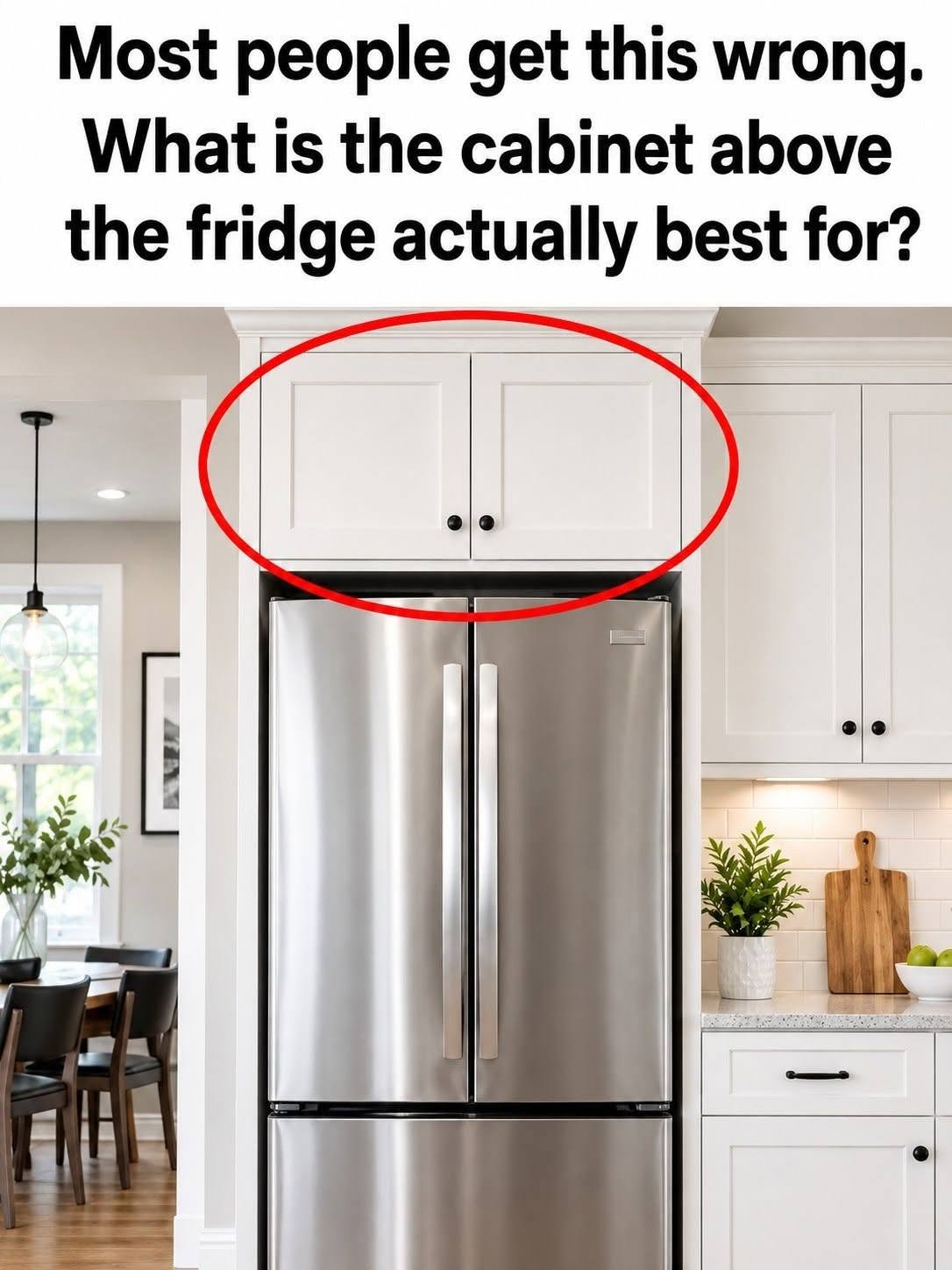
When viral articles claim that “most people get this wrong” about the cabinet above the refrigerator, they usually try to frame it as a secret architectural mystery. In reality, that cabinet’s intended purpose—and why it often frustrates homeowners—comes down to basic kitchen design, physics, and ergonomics.
What That Cabinet Is Actually Designed For
From a kitchen layout and construction standpoint, the cabinet above the fridge exists primarily to maintain visual continuity.
-
Completing the Cabinet Line: Kitchen designers place a cabinet there so the upper cabinetry doesn’t abruptly end, giving the kitchen a built-in, cohesive, finished look that reaches the ceiling or upper trim line.
-
Maximizing Structural Storage: Architecturally, it utilizes dead space that would otherwise collect dust. It was originally sized and placed to store large, bulky, or seasonal items that you don’t need to reach every day.
Why Everyone Hates Using It
Despite being designed for storage, that specific cabinet is notoriously annoying to access for a few very practical reasons:
-
Awkward Height and Reach: Placed high above a tall appliance, it requires standing on a step stool or stretching blindly overhead, making it unsafe for heavy or everyday items.
-
Heat Trap: Refrigerators release heat from their top and back vents. Storing items directly above a warm appliance means that space is often slightly warmer than the rest of the kitchen.
What Actually Belongs Up There (And What Doesn’t)
Because of its unique location, filling that cabinet correctly makes all the difference:
-
What to store there: Lightweight, infrequently used items. Think large plastic party platters, holiday-themed bakeware, oversized roasting pans, extra paper towel rolls, or picnic supplies that you pull down maybe two or three times a year.
-
What to avoid: Heavy cast-iron skillets (pulling a heavy skillet down from above your head is an accident waiting to happen), delicate glassware, or perishable food items that can degrade faster in the warm microclimate above the fridge.
If you want to make the space genuinely functional, use lightweight bins with front handles so you can slide them out easily rather than digging blindly into the dark corners.
