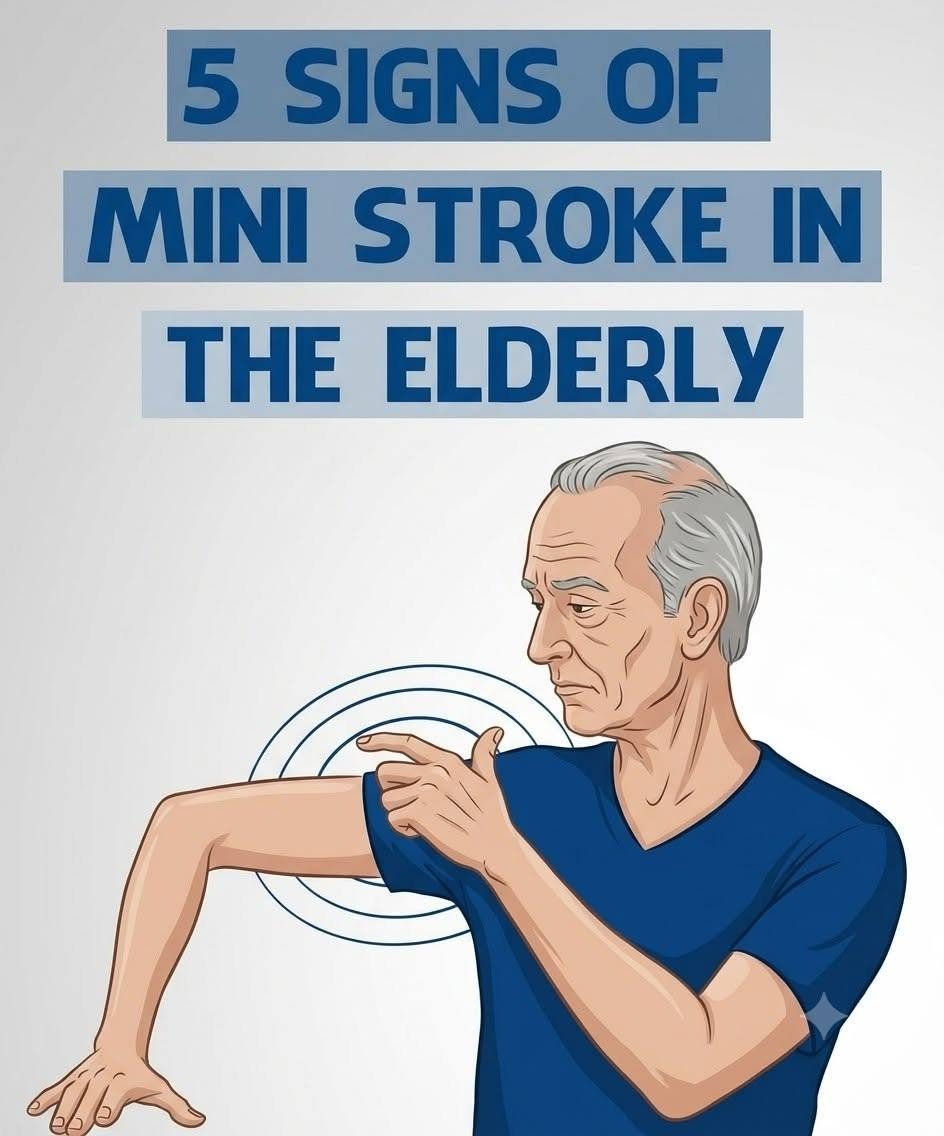
When health feeds and viral news articles publish headlines like “Mini-Strokes Often Go Unnoticed: 9 Symptoms You Should Never Ignore,” they are highlighting a genuine medical reality wrapped in anxiety-inducing clickbait.
While a “mini-stroke”—medically known as a Transient Ischemic Attack (TIA)—is indeed a serious warning sign that requires prompt medical evaluation, sensationalized lists often blur the line between acute neurological deficits and ordinary, harmless physical sensations.
What a TIA Actually Is
A Transient Ischemic Attack occurs when blood flow to a part of the brain is temporarily blocked, usually by a small blood clot.
-
The Key Difference: Unlike a full ischemic stroke, the blockage in a TIA is temporary and dissolves quickly on its own. As a result, the symptoms resolve completely within minutes to a few hours, and permanent brain damage does not occur.
-
Why It Is Called a “Warning Shot”: A TIA is often a critical preview of a potential major stroke in the future. Experiencing a TIA means your vascular risk factors need immediate medical management to prevent a more severe event.
What Clickbait “Mini-Stroke” Lists Get Wrong
Sensationalized articles frequently exploit vague, everyday discomforts to maximize panic:
-
The “Random Fatigue” Myth: Clickbait lists often lump in general tiredness, mild brain fog, fleeting muscle twitches, or routine tension headaches as potential TIAs. These everyday occurrences are almost never signs of a mini-stroke.
-
Misinterpreting Duration: A true TIA presents with sudden neurological dysfunction that maps to a specific area of the brain—it does not linger as a vague, generalized feeling for weeks on end.
The True Warning Signs: Remembering FAST
Neurologists and emergency physicians rely on rapid, clear frameworks rather than inflated 9-item lists to identify acute cerebrovascular events. The classic warning signs are sudden and unilateral (affecting one side of the body):
-
Face Drooping: One side of the face suddenly droops or feels numb. When the person smiles, the smile is uneven.
-
Arm Weakness: Sudden weakness or numbness in one arm. If the person tries to raise both arms, one drifts downward.
-
Speech Difficulty: Slurred speech, strange word choices, or a sudden inability to speak or understand simple sentences.
-
Sudden Vision Changes: Sudden loss or blurring of vision in one or both eyes, or double vision.
-
Sudden Balance or Coordination Loss: Sudden dizziness, loss of balance, or trouble walking, often accompanied by severe unsteadiness.
-
Sudden Severe Headache: A sudden, unusually intense headache with no known cause, sometimes described as the “worst headache of your life” (more commonly associated with hemorrhagic events, but still a critical red flag).
The Bottom Line
Don’t panic over routine dizziness or everyday fatigue. However, if you or someone nearby experiences sudden, unexplained neurological deficits—such as facial drooping, one-sided weakness, or slurred speech—treat it as an emergency. Even if symptoms vanish entirely within minutes, a TIA requires an immediate trip to the emergency room for diagnostic imaging and vascular evaluation.
