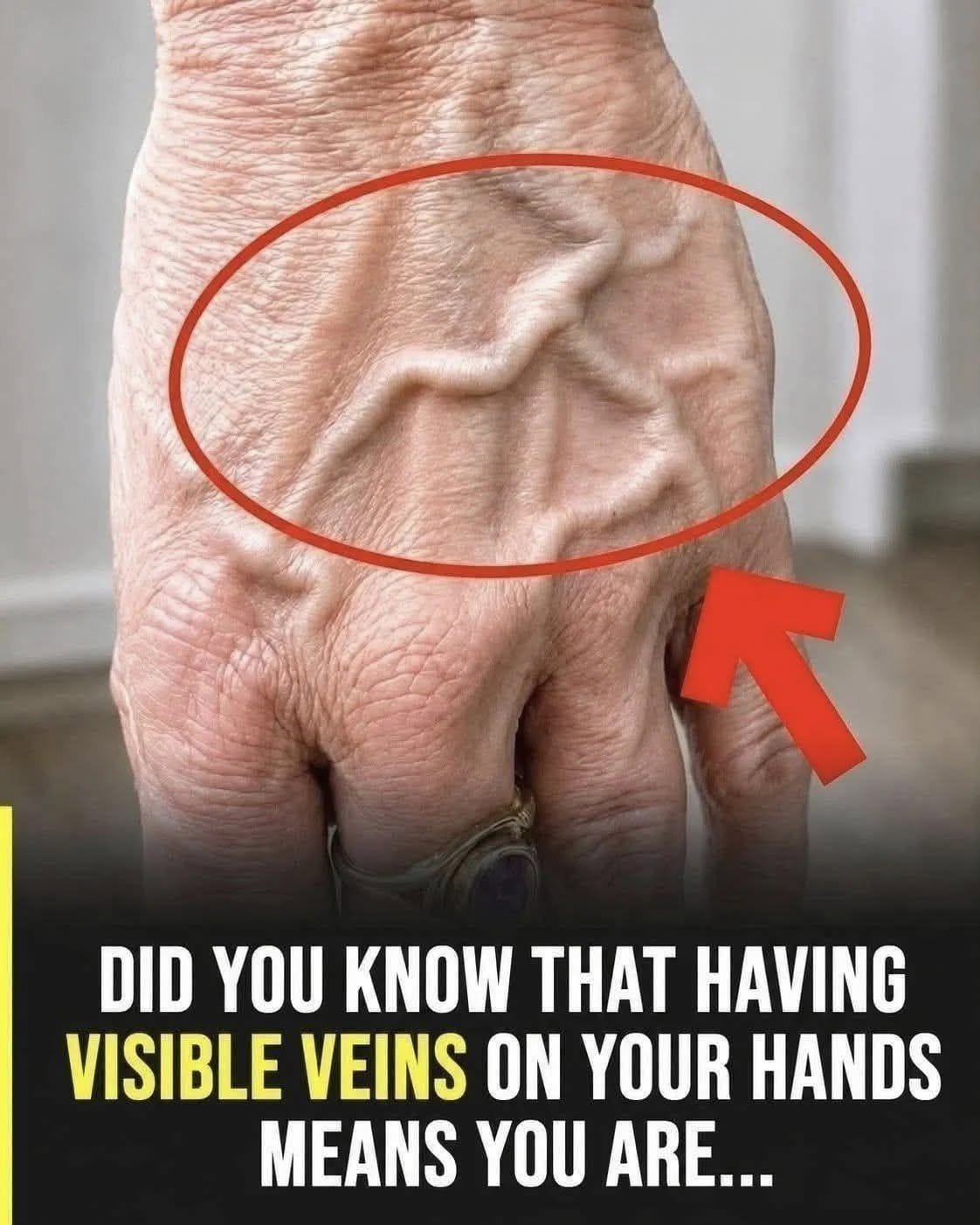
When sensationalized wellness posts or clickbait articles tease that “having visible veins means you are…”—usually finishing with a dramatic warning about hidden toxins, rapid aging, or an ominous health crisis—they rely on turning ordinary human anatomy into a scare tactic.
In reality, having visible or prominent veins is a common, normal physical trait dictated by simple biology, genetics, and environment rather than a mysterious medical omen.
What Clickbait “Vein” Myths Get Wrong
-
The “Toxic Overload” Scare: Clickbait often tries to frame visible veins or skin changes as a sign that your body is choked with toxins and desperately needs an aggressive cleanse.
-
The All-or-Nothing Fitness Trap: Articles tend to treat prominent veins as only a sign of extreme athletic conditioning, ignoring the fact that everyday people with entirely normal fitness levels have visible veins due to skin thickness and genetics.
The Clinical Reality: Why Veins Become Visible
Dermatologists, vascular specialists, and primary care physicians look at vein visibility through the lens of anatomical structure and normal physiology:
-
Subcutaneous Fat and Skin Thickness: Beneath your skin lies a layer of subcutaneous fat. If you have a lower body fat percentage, that insulating layer is thinner, allowing surface veins to show more clearly. Similarly, as people age, skin naturally loses collagen and elasticity, thinning out and making underlying blood vessels easier to see.
-
Genetics and Complexion: Inherited physical traits play a massive role in your vascular pattern. Additionally, individuals with fair complexions have skin that transmits light differently, making the blue-green tint of superficial veins much more apparent than on darker skin tones.
-
Temperature and Vasodilation: When you are warm (due to hot weather, a hot shower, or intense movement), your body undergoes vasodilation—blood vessels expand to bring warm blood closer to the skin’s surface so heat can escape, temporarily making veins more prominent.
-
Physical Activity and Blood Pressure: During exercise, your heart rate and blood pressure increase, and contracting muscles push blood vigorously through your circulatory system, causing superficial veins to swell and stand out temporarily.
When Visible Veins Actually Require Medical Attention
While standard prominent veins are entirely harmless, it is important to distinguish them from true medical conditions involving vein dysfunction:
-
Varicose Veins: These occur when the tiny one-way valves inside superficial veins weaken, causing blood to pool and the veins to become enlarged, twisted, and bulging. They can cause aching, heaviness, or cramping in the legs and often require professional medical evaluation.
-
Deep Vein Thrombosis (DVT): A sudden, painful swelling, warmth, or redness in one leg accompanied by a prominent or tender vein can signal a dangerous blood clot, which requires immediate medical care.
The Bottom Line
Having visible veins does not mean your body is failing or harboring a secret disease. It is usually just a reflection of your unique skin composition, genetics, temperature, or body fat distribution. Skip the alarmist internet claims, and consult a healthcare professional if you ever experience pain, throbbing, or sudden swelling.
